






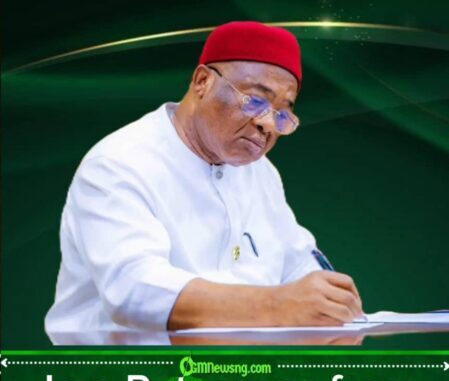
Repatriated Imo Indigenes have become the focus of national attention after reports emerged that Governor Hope Uzodinma approved a ₦1 Million Grant for each eligible Imo citizen evacuated from South Africa. The announcement came as the first batch of Nigerians arrived home under a federal repatriation programme prompted by rising anti-immigrant tensions in parts of South Africa. While many have welcomed the gesture as a compassionate intervention, others are asking whether the initiative could reshape conversations about government support, migration, and reintegration.
Reintegration To Develop #1Million Grant
The development follows the arrival of hundreds of Nigerians evacuated from South Africa after weeks of growing concern over anti-immigrant protests and xenophobic tensions. During the reception of returnees in Lagos, officials disclosed that Governor Hope Uzodinma had directed that account details of eligible Imo indigenes be collected so that a ₦1 Million Grant could be transferred to each beneficiary. Several returnees reportedly welcomed the announcement, describing it as a lifeline after losing businesses, jobs, and property abroad.
The financial support package arrives at a critical moment for many of the Repatriated Imo Indigenes, some of whom are returning after years of residence in South Africa. Government officials involved in the repatriation exercise stated that reintegration programmes are being coordinated alongside humanitarian assistance to help returnees settle back into Nigerian society. The broader evacuation effort is expected to involve more than 1,000 Nigerians who registered for voluntary return.
Repatriated: Context On The #1 million Grant
The story of the Repatriated Imo Indigenes extends beyond the cash grant itself. The repatriation programme emerged amid renewed debates about migration, unemployment, and anti-foreigner sentiment in South Africa. Nigerian authorities have maintained that many citizens chose to return because of fears linked to escalating tensions, while South African officials have also pointed to immigration enforcement measures affecting some migrants.
The ₦1 Million Grant also fits into a broader pattern of social and financial interventions associated with public authorities in Imo State. In recent months, the state government has highlighted welfare, infrastructure, and support initiatives, while federal programmes have delivered cash-transfer assistance to vulnerable households across the state. Analysts note that the latest intervention may be viewed both as humanitarian support and as a test case for how governments can assist citizens returning from crises abroad.
For now, attention remains fixed on implementation. Supporters argue that the ₦1 Million Grant could provide a meaningful restart for the Repatriated Imo Indigenes, while critics want transparency regarding beneficiary verification and disbursement. What is certain is that the initiative has transformed a repatriation exercise into a national conversation about migration, public welfare, and the responsibilities governments owe citizens when they return home after hardship. OGM News Nigeria will continue to monitor developments as more returnees arrive and reintegration efforts unfold.
Table of Contents
Discover more from OGM News NG
Subscribe to get the latest posts sent to your email.