



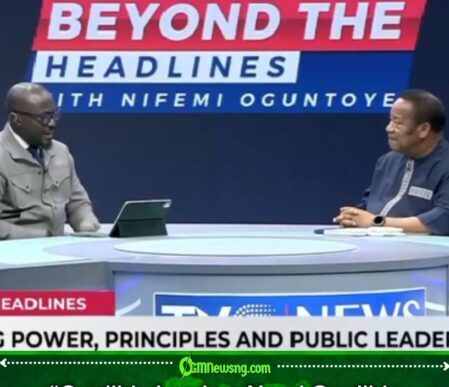
Pastor Femi Emmanuel has stirred a fresh debate within Nigeria’s religious and political circles after questioning the impact of having a pastor, Professor Yemi Osinbajo, serve as Vice President of Nigeria. The cleric argued that the church must move beyond demanding Christian representation at the highest levels of government and instead become actively involved in grassroots politics.
Speaking on the relationship between faith and politics, Pastor Emmanuel said the presence of a Christian leader in a top political position does not automatically translate into benefits for the church. He urged Christians to participate more in political structures, especially at the ward level, where party delegates and primary election decisions are shaped.
Pastor Femi Emmanuel Questions Benefits of Osinbajo’s Vice Presidency to the Church
Pastor Femi Emmanuel’s remarks have reopened conversations about the role of religion in Nigerian politics, particularly following the tenure of former Vice President Yemi Osinbajo, who is a pastor and one of Nigeria’s most prominent Christian political figures. Osinbajo served as Vice President under former President Muhammadu Buhari from 2015 to 2023.
According to Emmanuel, many Christians focused heavily on having a pastor occupy the Vice President’s office but failed to address the deeper political structures required to influence leadership decisions. He argued that political power is built through participation, organisation and engagement at the grassroots level.
The pastor’s comments have generated mixed reactions, with some agreeing that religious communities need stronger political awareness, while others believe the contribution of Christian leaders in government should not be judged only by direct benefits to religious institutions.
“Don’t Only Demand Christian Leaders, Build Political Influence” — Cleric Advises
Pastor Emmanuel also criticised what he described as the political ignorance of some pastors, saying religious leaders should encourage their members to understand how political systems operate. He emphasised that elections are often determined long before general voting takes place, particularly during party primaries where delegates select candidates.
He maintained that without credible delegates and active participation within political parties, the emergence of credible candidates would remain difficult. According to him, Christians seeking better leadership must become part of the process rather than staying outside and only demanding outcomes.
The statement has added another layer to the ongoing debate over religion, governance and political participation in Nigeria. As the country continues to prepare for future elections, discussions about the role of churches, faith leaders and citizens in shaping political outcomes are expected to remain prominent.
Pastor Femi Emmanuel’s remarks have challenged religious communities to rethink their approach to politics, focusing less on symbolic representation and more on building influence from the grassroots. OGM News NG will continue to monitor reactions and developments surrounding the growing conversation on faith and political participation in Nigeria.
Table of Contents
Discover more from OGM News NG
Subscribe to get the latest posts sent to your email.