









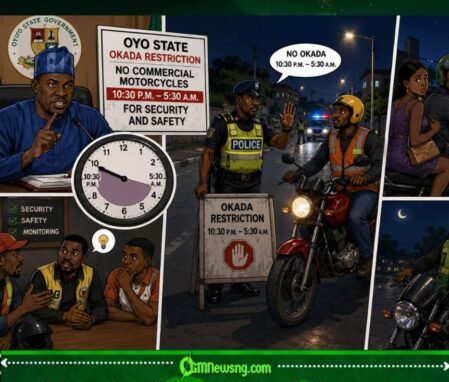
Okada Restriction don become the latest hot topic for Oyo State after Governor Seyi Makinde announce say commercial motorcycle operators no go fit carry passengers between 10:30 p.m. and 5:30 a.m. Government say the move na part of fresh efforts to strengthen Security following recent abduction cases wey don raise concern among residents. As riders dey check their watches and passengers dey adjust their movement plans, many people dey ask one question: will this rule frustrate criminals or simply send honest riders home earlier?
The decision come at a time when security matters dey dominate public discussion for Oyo State. Authorities insist say reducing late-night commercial motorcycle movement fit help security agencies monitor suspicious activities better. But as expected, the announcement quickly spark arguments from both supporters and critics, with social media users already joking say some okadas now get official bedtime.
Vigilance About Okada Restrictions
The new Okada Restriction specifically targets commercial motorcycle operations during late-night hours. According to state authorities, the policy forms part of broader efforts to address security concerns following recent abduction incidents and criminal activities reported within and around parts of the state.
Government officials believe say motorcycles often play different roles in criminal operations, whether as transport for suspects, means of escape, or tools for moving unnoticed through less-monitored areas. Because of this, the Security strategy aims to reduce movement during hours when visibility and surveillance are naturally lower. While authorities emphasize that law-abiding riders are not the target, the restriction nevertheless affects thousands of operators whose busiest periods sometimes occur at night.
Enforcement On Okada Restrictions
The wider conversation around Security no start today. Across different parts of Nigeria, state governments and security agencies have occasionally introduced transport restrictions, curfews, and movement controls whenever criminal activity increases. Supporters of such measures argue that temporary inconvenience can help prevent more serious threats to public safety.
However, some transport stakeholders have expressed concerns that restrictions alone may not completely solve the challenge of abductions or violent crime. Analysts frequently note that effective intelligence gathering, community policing, surveillance technology, and rapid emergency response remain critical components of long-term Security planning. In other words, while clocks fit stop riders from working, clocks alone no fit arrest criminals.
The economic angle also dey important. Many commercial motorcycle operators depend on evening and late-night trips to support their families. Some residents who return from work late, attend social events, or run businesses beyond normal hours may now need alternative transport arrangements. That reality has created a balancing act between public safety and economic survival.
As Oyo State begins implementing the Okada Restriction, residents, riders, and security agencies will all be watching the results closely. If the policy succeeds, supporters go point to improved Security outcomes. If challenges emerge, calls for adjustments may quickly follow. For now, one thing clear: in Oyo, when the clock strikes 10:30 p.m., even okada riders may need to start thinking about bedtime.
Table of Contents
Discover more from OGM News NG
Subscribe to get the latest posts sent to your email.