


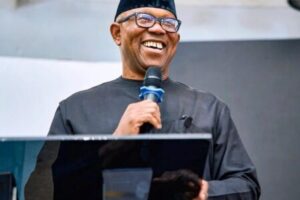



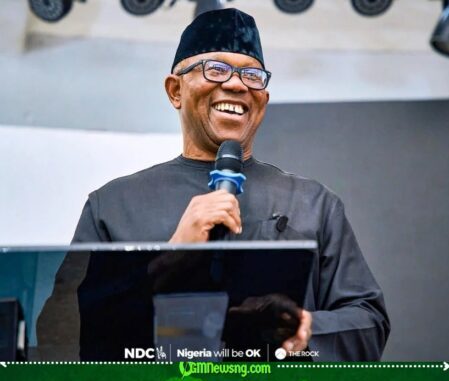
Peter Obi, the presidential candidate of the Nigeria Democratic Congress (NDC), has challenged the Federal Government over the management of resources generated following the removal of petrol subsidies, arguing that the enormous financial gains should have translated into improved healthcare, education and living conditions for ordinary Nigerians. During his campaign visit to Benin City, Edo State, Obi questioned the utilisation of the estimated ₦15.8 trillion in subsidy savings, suggesting that the money could have helped establish healthcare centres across the country’s wards and address longstanding problems in the education sector. Apparently, Nigerians were told to endure the economic consequences of subsidy removal, but Obi wants to know whether the promised benefits have been enjoying the same journey as the sacrifices.
THE ₦15.8 TRILLION QUESTION: WHERE ARE THE TANGIBLE BENEFITS?
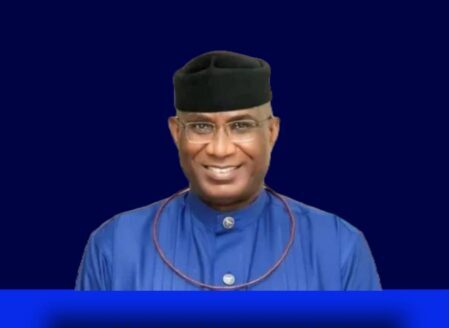
Accompanied by his running mate, Senator Rabiu Kwankwaso, and other supporters, Obi made the remarks during a visit to the Palace of the Oba of Benin, Oba Ewuare II. The traditional ruler received the presidential hopeful and his delegation, offered prayers for their safety and wished them well in their political ambitions. However, beyond the royal reception and political courtesies, Obi brought attention to an economic question that continues to resonate with Nigerians: what exactly has the country gained from the enormous financial resources generated after subsidy removal?
Obi argued that the estimated ₦15.8 trillion could have been channelled into healthcare and education, including the establishment of functional healthcare centres in every ward across Nigeria. His argument raises an uncomfortable question for policymakers: if government reforms are intended to improve the country’s finances, should ordinary citizens not also see meaningful improvements in hospitals, schools and other essential public services? After all, economic statistics may look impressive in official presentations, but citizens cannot use impressive figures to treat patients or educate children.
NATIONAL RESET: OBI AND KWANKWASO TAKE THEIR MESSAGE TO BENIN RESIDENTS
From the palace, the NDC campaign train proceeded to the Baptist Church Convention Centre in Benin City, where Obi and Kwankwaso held a town hall meeting with residents ahead of the 2027 general elections. Obi called for a national reset, describing Nigeria as a country experiencing decline and insisting that purposeful leadership and a change in direction were necessary to reverse the situation. He maintained that the country needed leaders with the competence, energy and commitment to deliver responsible governance rather than continue with policies whose benefits remain difficult for ordinary people to identify.
The former Anambra State governor also expressed confidence in his ability, alongside Kwankwaso, to address Nigeria’s economic and social challenges. The campaign meeting was presented as an opportunity to engage directly with voters, understand their concerns and identify their needs. However, with another election approaching, Nigerians will understandably expect more than promises, campaign speeches and carefully delivered political assurances. The real test will be whether the candidates can explain how their proposed national reset would translate into affordable healthcare, quality education, employment opportunities and a better standard of living.
THE POLITICAL PROMISE VERSUS THE ECONOMIC REALITY
There is, however, an important financial distinction worth noting. According to the Federal Ministry of Finance’s August 2026 economic reform scorecard, the estimated ₦15.8 trillion in subsidy savings between June 2023 and December 2025 was shared across the three tiers of government. The Federal Government’s estimated share was ₦5.43 trillion, while states received ₦6.52 trillion and local governments ₦3.88 trillion. The ministry also reported additional expenditure pressures of approximately ₦30.64 trillion, including wages, debt servicing, infrastructure and electricity support. This means the entire ₦15.8 trillion was not sitting in one Federal Government account waiting to be spent. Nevertheless, the figures strengthen the argument for transparent accounting and effective service delivery at every level of government. By the Numbers +1
Ultimately, Obi’s criticism has placed an important question at the centre of the 2027 political conversation: beyond removing subsidies and announcing financial reforms, what measurable improvements have Nigerians experienced in their daily lives? While the government has offered its explanation of how the resources were distributed and spent, citizens will continue to judge economic policies by the conditions of their hospitals, schools, roads and household finances. Whether Obi’s proposed national reset can provide a convincing alternative remains to be seen. Stay with OGM News NG for further updates as the political debate over Nigeria’s economic direction intensifies.
Table of Contents
Discover more from OGM News NG
Subscribe to get the latest posts sent to your email.