









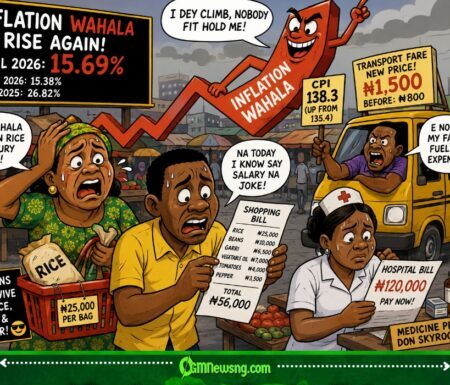
Fresh inflation figures don land, and e be like say the only thing wey still cheap for Nigeria na motivational quotes for social media. According to the latest Consumer Price Index report released by the National Bureau of Statistics, headline inflation rise from 15.38 per cent for March 2026 to 15.69 per cent for April 2026. As food, transport, healthcare and hospitality costs continue to climb, many Nigerians don begin joke say budgeting now resemble advanced mathematics exam. But behind the jokes and memes, the economic pressure dey bite deeply across homes and businesses nationwide. The new “Wahala” no be online cruise again; na daily reality for millions of citizens.
Wahala For Inflation Market, Transport And Kitchen Table
The latest figures show say Consumer Price Index rise from 135.4 in March to 138.3 in April, confirming wetin many Nigerians already don notice each time dem enter market. Food prices continue to pressure households badly as staple items like rice, beans, tomatoes and cooking ingredients maintain stubborn price increases. For many homes, family meal planning don turn survival strategy meeting. Some traders dey blame insecurity, transport cost and supply chain problems, while buyers simply dey ask why salary still dey behave like old generator wey no fit carry load.
Transport operators too don enter the “Wahala” conversation fully. Across major cities, commuters complain say transport fare dey change almost daily depending on fuel availability, vehicle maintenance cost and road conditions. Some workers reportedly don reduce movement or switch to trekking for shorter distances just to balance expenses. Hospitality businesses and eateries no escape the pressure either, as many operators quietly reduce portion sizes while trying to avoid scaring customers away completely. Na the kind situation wey make one customer joke say restaurant stew now dey appear for plate like election promise — small but expensive.
Wahala Beyond Food As Healthcare And Small Businesses Feel Inflation Heat
Healthcare costs also continue to rise, adding another layer of pressure for struggling families. Pharmacy owners and clinic operators across the country don repeatedly mention increased cost of imported drugs, equipment and operational expenses. Some patients now delay treatment or search for cheaper alternatives before visiting hospitals. Economic analysts say this pattern fit create bigger public health concerns if the trend continues for long, especially for low-income households wey already dey battle rising living costs from every angle.
Beyond household struggles, small businesses dey face serious operational challenges under the growing “Wahala.” Experts don note say inflation affects consumer spending because people naturally reduce non-essential expenses whenever survival becomes priority. Hotels, restaurants and service providers now dey witness slower customer spending patterns even during weekends. At the same time, business owners still need pay higher electricity bills, transportation fees and supplier charges. Economic observers also point out say although the current inflation rate lower compared to the 26.82 per cent recorded during April 2025, the continuous month-to-month increase still dey raise concern about purchasing power and long-term economic stability.
For now, many Nigerians continue to survive with humour, resilience and endless calculations inside market aisles. But behind every meme about expensive tomatoes and shrinking salaries, the deeper concern remain whether ordinary citizens fit continue absorb the pressure if this inflation “Wahala” keeps climbing. OGM News Pidgin go continue monitor the situation as Nigerians wait to see whether relief dey near or whether another surprise price increase dey prepare for next month.
Table of Contents
Discover more from OGM News NG
Subscribe to get the latest posts sent to your email.