






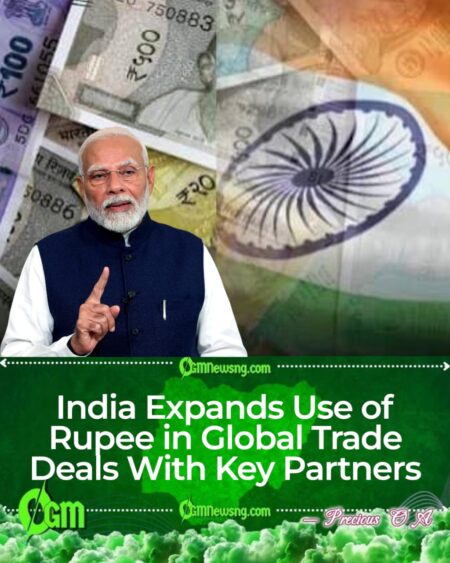
India is increasingly using its national currency, the rupee, for bilateral trade with countries such as Russia and the United Arab Emirates, signaling a gradual shift in how international transactions are structured. This move reflects a broader attempt to diversify trade settlement systems while reducing exposure to exchange rate volatility associated with dominant global currencies.
The development comes at a time when global financial systems are undergoing subtle yet significant transformation, with emerging economies exploring alternatives to traditional dollar-based settlements. Analysts note that such efforts are not abrupt disruptions but rather incremental adjustments shaped by economic strategy and geopolitical realities.
Observers emphasize that this shift is being implemented cautiously, with mechanisms designed to ensure stability in trade balances and minimize risks associated with currency fluctuations.
EVOLVING GLOBAL TRADE AND CURRENCY DYNAMICS
The global trading system has historically relied heavily on a few dominant currencies, particularly the U.S. dollar, which has long served as the primary medium for international transactions. However, recent developments suggest that countries are increasingly willing to explore diversified payment frameworks.
This gradual evolution is driven by a combination of economic, political, and technological factors, including the desire to reduce dependency on single-currency systems and to enhance financial sovereignty.
Experts highlight that while such changes are gaining momentum, they are unlikely to displace existing structures in the short term, instead contributing to a more multipolar financial environment.
INDIA AND STRATEGIC ECONOMIC POSITIONING
India has positioned itself as a key participant in this evolving financial landscape, leveraging its growing economic influence to promote the use of the rupee in cross-border trade. The approach aligns with long-term goals of strengthening the currency’s international role.
India’s strategy involves negotiating bilateral agreements that allow trade partners to settle transactions in local currencies, thereby reducing reliance on external exchange systems.
India’s expanding trade relationships provide a practical foundation for implementing such arrangements while maintaining economic stability.
BILATERAL PARTNERSHIPS AND TRADE MECHANISMS
Trade agreements between countries often serve as testing grounds for new financial arrangements, including local currency settlements. These agreements require careful coordination to ensure that trade imbalances do not create undue pressure on participating economies.
In partnerships involving Russia and the United Arab Emirates, frameworks have been developed to facilitate smoother transactions while managing risks associated with exchange rates.
Such mechanisms highlight the importance of trust, transparency, and regulatory alignment in sustaining alternative trade systems.
IMPLICATIONS FOR GLOBAL CURRENCY STRUCTURES
India’s increased use of the rupee in trade has contributed to broader discussions about the future of global currency hierarchies. While the U.S. dollar continues to dominate, incremental shifts by major economies can influence long-term trends.
India’s actions are often interpreted as part of a diversification strategy rather than a direct challenge to established financial systems, reflecting a pragmatic approach to economic policy.
India’s role in this context underscores the growing influence of emerging economies in shaping international financial practices.
FUTURE TRAJECTORY OF INTERNATIONAL TRADE SYSTEMS
India is expected to continue expanding its use of the rupee in bilateral trade arrangements, particularly with partners seeking flexible and diversified payment options. These efforts may evolve alongside advancements in financial technology and digital payment systems.
The broader trend suggests a gradual movement toward a more distributed global financial system, where multiple currencies coexist and serve different regional and economic needs.
Ultimately, the shift reflects a changing economic landscape in which adaptability, cooperation, and strategic planning play central roles in shaping the future of international trade.
Table of Contents
Discover more from OGM News NG
Subscribe to get the latest posts sent to your email.