








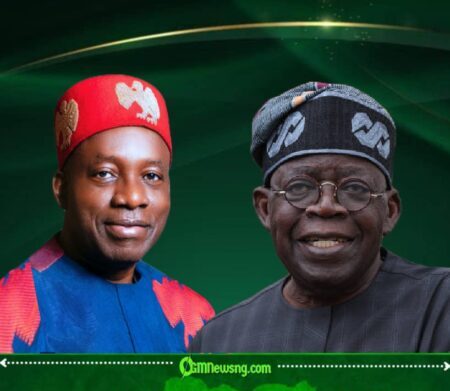
Governor Charles Soludo has positioned himself at the center of a critical national conversation. The Anambra State governor has openly urged the Southeast to adopt a pragmatic political strategy by aligning with Bola Ahmed Tinubu, arguing that such a move is essential for securing relevance and influence at the federal level.
Soludo’s remarks have sparked widespread reactions, particularly within the Southeast, where political alignment has often been shaped by historical grievances and regional aspirations. However, the governor insists that the realities of modern Nigerian politics demand a shift toward strategic engagement rather than emotional decision-making.
By placing the region’s long-term interests above personal or party affiliations, Soludo has introduced a perspective that prioritizes political inclusion and bargaining power. His position signals a potential recalibration of Southeast politics as the nation approaches another pivotal electoral cycle.
Governor Charles Soludo Pushes for Strategic Political Alignment
At the heart of the discussion is Charles Soludo’s assertion that the Southeast must act in its own best interest by supporting a likely winning candidate. According to him, President Tinubu’s chances of re-election remain strong, making it strategically wise for the region to align early rather than risk political exclusion.
Soludo did not shy away from expressing his personal support for Tinubu, describing him as both a friend and a leader who has performed commendably. While acknowledging that opinions may differ, he maintained that his stance is rooted in both political calculation and personal conviction.
More significantly, the governor stressed that the issue goes beyond individual preferences. He argued that the Southeast must think collectively, ensuring that it has a seat at the table where key national decisions are made. In his view, political neutrality or opposition without strategy could result in diminished influence.
Governor Charles Soludo Highlights Lessons from Political History
In reinforcing his argument, Charles Soludo drew attention to past political strategies employed by the All Progressives Grand Alliance (APGA). He recalled how the party adopted Goodluck Jonathan as its presidential candidate in 2011 instead of fielding its own, a move that ensured continued relevance at the national level.
By referencing this precedent, Soludo emphasized the importance of alliance-building in Nigeria’s political landscape. He argued that such strategies are not new but are deeply rooted in the country’s democratic history, particularly during periods when collaboration yielded tangible benefits for participating regions.
However, the governor also acknowledged the challenges involved in convincing the Southeast electorate. He noted that political sentiments and reservations must be addressed through effective communication and engagement. Despite these hurdles, he expressed confidence that the people would ultimately embrace a strategy that promises greater inclusion.
Governor Charles Soludo Calls for Enlightened Self-Interest
A central theme in Charles Soludo’s message is the concept of enlightened self-interest. He urged the Southeast to move away from protest-driven politics and instead focus on building alliances that can deliver tangible benefits.
Invoking the legacy of Nnamdi Azikiwe, Soludo called for a return to bridge-building politics that characterized Nigeria’s early republics. According to him, such an approach fosters unity, cooperation, and shared progress, all of which are essential for national development.
Ultimately, Soludo’s remarks underscore a broader political philosophy centered on pragmatism and inclusion. As the 2027 elections draw closer, his call for strategic alignment is likely to shape political discourse within the Southeast and beyond, positioning the region as an active participant in Nigeria’s evolving democratic journey rather than a passive observer.
Table of Contents
Discover more from OGM News NG
Subscribe to get the latest posts sent to your email.