






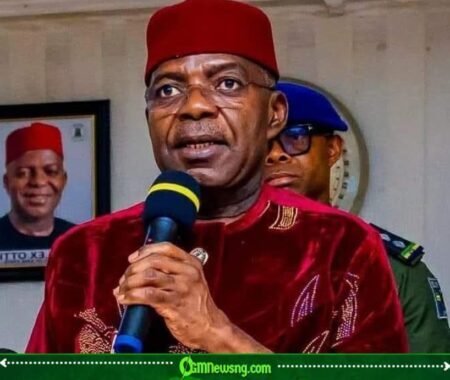
The Governor of Abia State, Alex Otti, has reiterated his administration’s commitment to building a unique and culturally rooted capital city, emphasizing that Umuahia should reflect its own identity rather than imitate global cities like Dubai. Speaking during a recent address, Otti declared, “I don’t want Umuahia to look like Dubai, I want it to look like Umuahia,” underscoring a development philosophy centered on authenticity over imitation.
This statement comes amid ongoing infrastructural upgrades and urban renewal projects in Umuahia, which have sparked conversations among residents and observers about the direction of development in the state. While some have called for rapid modernization modeled after global cities, Otti’s stance signals a deliberate shift toward preserving local heritage while embracing sustainable growth.
The governor explained that development is not merely about aesthetics or replicating foreign standards but about creating an environment that serves the needs, culture, and aspirations of the people. By prioritizing indigenous identity, the administration aims to foster a sense of pride among residents while ensuring that development projects remain relevant and inclusive.
Early Stages of Transformation: Infrastructure, Planning, and Vision
Governor Otti acknowledged that the transformation of Umuahia is still in its early stages, noting that the government is “just getting started.” He highlighted ongoing road construction, environmental sanitation, and urban planning initiatives as foundational steps toward long-term development. These projects are designed to improve mobility, enhance public health, and create a more organized city layout.
Urban planning experts have noted that starting with basic infrastructure is critical for sustainable growth. In Umuahia, efforts are being made to address long-standing issues such as poor drainage systems, traffic congestion, and inadequate public facilities. By tackling these challenges early, the administration aims to lay a solid foundation for future expansion and modernization.
Despite the visible progress, Otti urged residents to remain patient and supportive, emphasizing that meaningful transformation takes time. He stressed that the government is focused on building systems that will endure rather than pursuing quick fixes or cosmetic changes that may not stand the test of time.
Rejecting Comparisons: A New Development Narrative for Nigerian Cities
A key element of Governor Otti’s message is the rejection of constant comparisons with global cities like Dubai. According to him, such comparisons can be misleading and counterproductive, as they often ignore the unique socio-economic realities and cultural contexts of Nigerian cities. Instead, he advocates for a development model that is tailored specifically to Umuahia’s needs and potential.
This approach aligns with a growing trend among urban planners who argue that African cities should develop their own identities rather than mimic Western or Middle Eastern models. By focusing on local strengths—such as community structure, cultural heritage, and economic activities—cities like Umuahia can achieve more sustainable and meaningful growth.
Residents and stakeholders have responded with mixed reactions, with some praising the governor’s vision as refreshing and realistic, while others remain eager for faster, more visible transformations. However, Otti remains steadfast in his belief that true progress lies in building a city that reflects its people, rather than chasing the image of another.
Building Umuahia’s Future on Identity and Sustainability
As the transformation of Umuahia continues, the Otti administration is expected to roll out more policies and projects aimed at strengthening the city’s infrastructure and economic base. These may include investments in education, healthcare, and technology, all designed to improve the quality of life for residents.
The governor’s emphasis on identity-driven development could also have broader implications for other states in Nigeria. If successful, Umuahia may serve as a model for how cities can modernize without losing their cultural essence, striking a balance between tradition and innovation.
Ultimately, Otti’s vision presents a compelling narrative: that development should not be about imitation but about self-definition. As Umuahia evolves, the focus remains clear—building a city that is not only modern and functional but also proudly and unmistakably its own.
Table of Contents
Discover more from OGM News NG
Subscribe to get the latest posts sent to your email.