





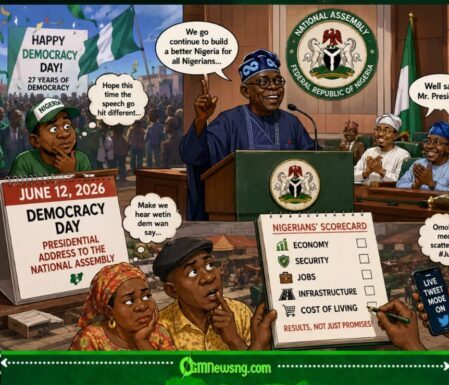
As Democracy Day dey draw near, one major political event don capture public attention. President Bola Ahmed Tinubu go deliver Joint Address to the National Assembly on June 12, 2026, as part of activities to celebrate Nigeria’s 27th Democracy Day anniversary. But while lawmakers dey prepare their seats and protocol officers dey rehearse timetable, many Nigerians don already prepare something else entirely — scorecards, expectations and plenty questions.
For streets, offices and social media platforms, discussion no be whether the speech go happen; na whether the speech go answer the concerns wey dey worry ordinary citizens. Some people dey expect major policy updates, others dey expect fresh promises, while a few comedians don jokingly reserve front-row seats for what dem call “annual grammar festival.” Yet beneath the jokes, serious public interest dey surround the occasion.
Democracy Day with high Expectations
The planned address follows tradition of using Democracy Day to reflect on Nigeria’s democratic journey and discuss national priorities. June 12 holds special significance because e represents one of the most symbolic dates in the country’s political history and is now officially recognized as Democracy Day.
The Joint Address to the National Assembly brings together members of both legislative chambers for one of the most visible political engagements of the year. Government supporters say the occasion provides an opportunity for the President to present achievements, ongoing reforms and future plans. Critics, however, say citizens go judge success less by applause inside the chamber and more by realities outside am, especially regarding the economy, security and living conditions.
National Assembly Awaits Democracy Day
The upcoming event comes at a period when public attention remains focused on economic reforms, infrastructure projects, security challenges and efforts to attract investment. Since assuming office, the Tinubu administration has introduced policies that continue to generate intense debate among economists, political observers and ordinary Nigerians. As a result, many stakeholders believe the National Assembly address could offer additional clarity on government direction.
Beyond ceremony and protocol, Democracy Day also serves as a reminder of Nigeria’s democratic endurance over nearly three decades of uninterrupted civilian governance. Political analysts note that anniversaries like this often become opportunities for leaders to shape public narratives, reassure investors and send signals to both allies and opponents. In other words, while microphones and cameras may focus on the President, different audiences across the country will be listening for very different messages.
As June 12 approaches, the real test of the Democracy Day address may not be how many standing ovations happen inside the National Assembly, but how much confidence the message inspires among Nigerians afterwards. Until then, politicians will continue preparing speeches, commentators will continue making predictions, and citizens will continue waiting to hear whether the next chapter comes with solutions, surprises, or simply another round of premium political grammar. OGM News Pidgin go continue to monitor developments as the event draws closer.
Table of Contents
Discover more from OGM News NG
Subscribe to get the latest posts sent to your email.