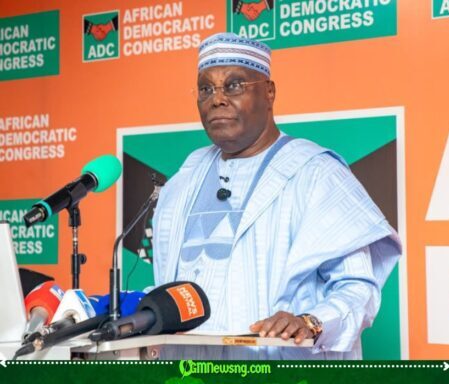






The All Progressives Congress (APC) has firmly rejected allegations by the African Democratic Congress (ADC) linking it to the Independent National Electoral Commission (INEC)’s decision to delist key members of the ADC’s leadership. The ruling party maintained that the opposition’s challenges stem from internal disarray rather than any external interference.
INEC’s action, which affected figures such as David Mark and Rauf Aregbesola, has intensified political tensions, with the ADC accusing the APC and President Bola Tinubu of orchestrating the development. However, the APC has dismissed these claims, describing them as baseless and a diversion from the ADC’s internal leadership crisis.
INEC Decision and Legal Backing
INEC announced its decision to delist the David Mark-led National Working Committee following a court directive to maintain the status quo pending the resolution of an ongoing legal dispute. According to the commission, the move was not arbitrary but a necessary step to comply with judicial instructions and uphold electoral law.
The commission’s spokesperson, Mohammed Haruna, explained that the action aligns with established democratic procedures. By adhering to the court order, INEC sought to avoid further complicating the legal contest over the party’s leadership structure.
This intervention underscores the judiciary’s central role in resolving intra-party disputes, especially when conflicting factions claim legitimacy. Analysts note that such rulings often aim to preserve institutional order while allowing due process to take its course.
APC’s Rebuttal and Political Criticism
In a strongly worded response, APC National Publicity Secretary, Felix Morka, described the ADC’s accusations as “escapist and irresponsible.” He argued that the opposition party’s predicament is self-inflicted, arising from its failure to adhere to its own constitutional processes.
The APC further criticised the circumstances surrounding the emergence of the Mark-led leadership, alleging that it violated established procedures and disregarded the rule of law. According to the ruling party, these actions triggered the current legal battles and subsequent regulatory consequences.
The statement also accused the ADC of focusing excessively on attacking the APC instead of addressing its internal governance issues. It concluded that a party unable to manage its own affairs lacks the credibility to present itself as a viable alternative to voters.
ADC Leadership Crisis and Electoral Implications
The ADC has been embroiled in a prolonged leadership dispute since 2025, following disagreements over succession after the tenure of former chairman Ralph Nwosu ended in 2022. The transition that brought in the Mark-led executive reportedly deepened divisions within the party.
Rival factions have since emerged, each laying claim to legitimacy, leading to multiple court cases and sustained uncertainty. This internal conflict has raised concerns about the party’s organisational stability and its readiness for the 2027 general elections.
Political observers warn that unresolved disputes could weaken the ADC’s electoral prospects. Without a unified leadership and clear direction, the party may struggle to mobilise support or present a coherent platform to the electorate.
Table of Contents
Discover more from OGM News NG
Subscribe to get the latest posts sent to your email.