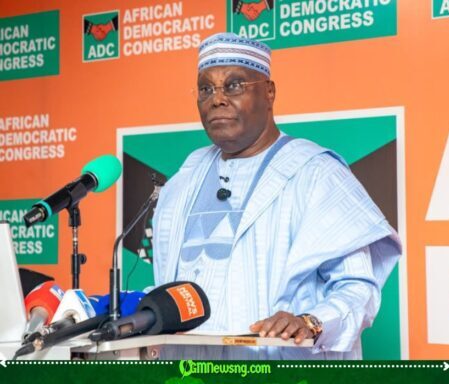







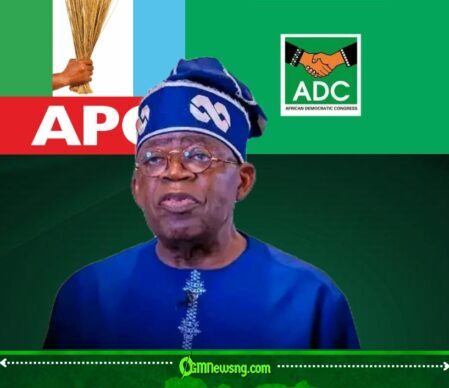
The African Democratic Congress (ADC) has accused President Bola Ahmed Tinubu’s emerging 2027 presidential campaign council of looking less like a conventional election machine and more like what it sarcastically described as a “rehabilitation centre” for politicians carrying unresolved corruption questions. The allegation, made by ADC National Publicity Secretary Mallam Bolaji Abdullahi, has added a fresh layer of controversy to the early campaign season, with the opposition demanding explanations about the status of past investigations involving some appointees.
The criticism comes as Nigeria’s political parties move into the 2027 election campaign period. Reports confirm that President Tinubu will chair the APC Presidential Campaign Council, with Vice President Kashim Shettima and APC National Chairman Nentawe Yilwatda as vice chairmen, while former Zamfara Governor Abdulaziz Yari was appointed Director-General.
ADC Asks: Where Did the Corruption Cases Go?
According to the ADC, the controversy is not simply about who has joined the campaign structure but whether previous corruption allegations have actually been resolved. The party specifically questioned the inclusion of figures such as former Humanitarian Affairs Minister Betta Edu and former NSITF chairman Ngozi Olejeme, arguing that the government should explain whether outstanding cases involving politically exposed persons were concluded, dismissed or otherwise resolved.
The satire almost writes itself: in Nigeria’s political theatre, the ADC appears to be asking whether corruption allegations now come with an expiration date — perhaps conveniently timed to coincide with election season. But behind the joke lies a serious accountability question. Edu was suspended by President Tinubu in January 2024 amid controversy involving an attempted ₦585 million transfer from a public programme account to a private account, while Olejeme has faced EFCC prosecution over alleged financial offences. Allegations and prosecutions, however, should not be treated as proof of guilt, and the legal status of individual cases requires specific confirmation.
2027 Election Turns Into Referendum on Tinubu’s Record
The ADC has also declared that the 2027 presidential election will effectively become a referendum on President Tinubu’s record, particularly the economic consequences of his administration’s policies. That argument lands in an already heated political environment: Reuters reports that Tinubu’s reforms have improved some macroeconomic indicators and attracted investor support, but have also intensified short-term cost-of-living pressures for many Nigerians.
The economic backdrop gives the political argument plenty of fuel. The IMF said in June that Nigeria had achieved improved macroeconomic outcomes after major reforms, while warning that conditions remained difficult, with poverty estimated at 63 percent and about 27 million Nigerians estimated to have experienced food insecurity in late 2025. The ADC wants a targeted, capped, budgeted and independently audited fuel-production subsidy, insisting that every naira should be traceable and every barrel accounted for. Meanwhile, the Tinubu administration has defended its reforms as necessary to stabilise Nigeria’s finances and attract investment.
For now, the political temperature is rising: the ADC is demanding answers over corruption allegations and the handling of past cases, while the ruling camp prepares to sell its record to voters. Whether the campaign council ultimately becomes a symbol of political rehabilitation, as the opposition alleges, or simply a conventional election organisation will be tested by evidence, accountability and ultimately the voters. OGM News NG will continue to watch the unfolding 2027 political drama for further developments.
Table of Contents
Discover more from OGM News NG
Subscribe to get the latest posts sent to your email.