






The internal crisis within the African Democratic Congress (ADC) has escalated sharply, as a faction aligned with the party’s 2023 presidential candidate, Dumebi Kachikwu, declared its full support for the Independent National Electoral Commission’s (INEC) decision to withdraw recognition of the David Mark-led leadership.
At a press briefing in Abuja, the group not only endorsed INEC’s stance but also formally distanced itself from both David Mark and factional figure Nafiu Bala Gombe, deepening divisions within the party. The development signals a critical turning point for the ADC as it grapples with legitimacy, leadership, and its future participation in Nigeria’s electoral process.
ADC Faction Aligns with INEC, Rejects Rival Leadership
The Kachikwu-aligned faction publicly backed INEC’s decision, which followed a ruling by the Appeal Court. According to the group, the withdrawal of recognition from the Mark-led executive was a lawful and necessary step to uphold the party’s constitution.
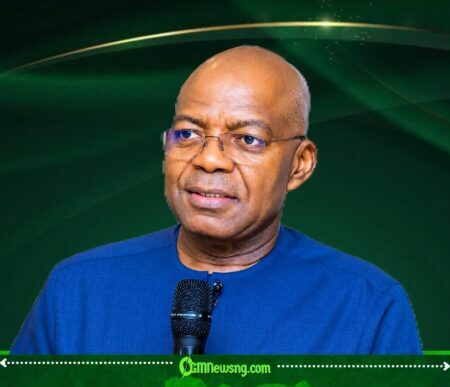
Speaking through its publicity secretary, Obinna Don Norman, the faction emphasised that it does not recognise any authority exercised by David Mark or his executive members. The group also rejected Nafiu Bala Gombe’s claim to leadership, stating that his emergence did not follow any credible or constitutionally recognised process.
This dual disavowal effectively isolates both rival camps, leaving the Kachikwu faction asserting itself as the only legitimate authority within the party structure.
Allegations of Hijack and Constitutional Violations
Central to the faction’s argument is the claim that former national chairman Ralph Nwosu attempted to hand over control of the ADC to individuals who were not bona fide members. The group insisted that David Mark and his associates failed to meet the constitutional requirement of at least two years’ membership before assuming leadership roles.
The faction further questioned the legitimacy of planned party congresses, stating that such activities were neither approved nor ratified by the National Executive Committee (NEC). This, they argued, renders any outcomes from those processes null and void.
By raising these constitutional concerns, the group seeks to reinforce its claim that it is acting to preserve the party’s legal and organisational integrity rather than merely engaging in a power struggle.
Emergence of Interim Leadership and ‘Rescue Mission’
In a decisive move, the faction announced a new interim leadership drawn from 25 state chapters. Ogga Temitope Kingsley was named interim National Chairman, alongside other key officials including Odion Kennedy as Secretary and Obinna Don Norman as publicity secretary.
The faction described its actions as part of a “rescue mission” aimed at safeguarding the ADC’s ability to participate in future elections. According to Norman, the newly constituted NEC will serve as a temporary structure to interface with INEC and stabilise the party until ongoing legal disputes are resolved.
He added that once normalcy returns, the interim leadership would step aside to allow a properly constituted executive to take over, signalling an attempt to frame the move as transitional rather than permanent.
Denial of External Influence and Political Motives
Responding to allegations that the faction might be backed by the ruling All Progressives Congress (APC), Norman firmly denied any such connection. He maintained that the group’s actions are entirely independent and motivated solely by a desire to protect the ADC’s standing in Nigeria’s political landscape.
He stressed that the faction’s objective is to prevent the party from being weakened or excluded from future elections due to internal disarray or external manipulation. By rejecting claims of political sponsorship, the group seeks to bolster its credibility amid widespread suspicion that often accompanies intra-party conflicts in Nigeria.
Nevertheless, the unfolding crisis continues to raise questions about the ADC’s cohesion and its readiness to function as a viable political force ahead of upcoming electoral cycles.
Conclusion: A Party at a Crossroads
The latest developments underscore the deepening fragmentation within the ADC, with multiple factions laying claim to legitimacy and authority. As legal battles and political manoeuvres continue, the party faces a critical test of its institutional resilience.
Whether the Kachikwu-led faction can consolidate control and restore unity remains uncertain. What is clear, however, is that the ADC’s ability to navigate this crisis will significantly shape its future role in Nigeria’s democratic process.
Table of Contents
Discover more from OGM News NG
Subscribe to get the latest posts sent to your email.