





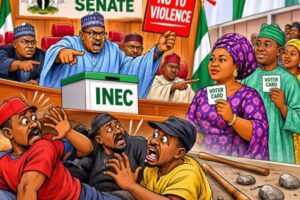

The political atmosphere ahead of Nigeria’s 2027 general elections is becoming increasingly heated, with the Nigeria Democratic Congress (NDC) rejecting allegations by the All Progressives Congress (APC) that opposition parties are recruiting thugs to disrupt political activities. In a dramatic political exchange, the NDC has turned the accusation against the ruling party, alleging that its members and supporters have suffered intimidation, targeted attacks and political violence across several states. Apparently, Nigeria’s political parties are already competing over something other than manifestos: who should be held responsible for the growing atmosphere of political hostility.
The controversy followed allegations by APC Presidential Campaign Council spokesperson Dele Alake, who accused the NDC and African Democratic Congress (ADC) of sponsoring hoodlums, organising protests and spreading misinformation to disrupt President Bola Tinubu’s campaign activities. The NDC, however, dismissed the allegations as false, suggesting that the ruling party was attempting to portray itself as a victim while ignoring complaints of violence against opposition supporters.
NDC Turns the Accusation Around, Lists Alleged Attacks Against Its Members
In a statement signed by its National Campaign Council Deputy Spokesperson 2, Dr Sam Omale, the NDC described the APC’s allegations as a case of “the perpetrator crying victim”. The opposition party alleged that its members had endured a prolonged campaign of intimidation and politically motivated attacks. Among the incidents it cited was the July 18, 2025, controversy involving Edo State Governor Monday Okpebholo, who warned Peter Obi against visiting Edo State without notifying him or obtaining security clearance. The governor’s remarks attracted criticism from political figures and human rights advocates, although the Edo State Government subsequently argued that the warning should not be interpreted as a threat.
The NDC also referred to an alleged video involving Senator Francis Fadahunsi, in which he was accused of making inflammatory remarks against members of a rival political party. It further alleged that armed attackers invaded its campaign office in Enugu on October 10, 2026, resulting in the death of a party member, Ifeanyi Christopher Nwolie. However, the Enugu State Government disputed reports of a death following the October incident, making the circumstances and competing accounts important matters for further investigation. The party also alleged that its November 12 town hall meeting in Oregun, Lagos, was attacked, leaving some supporters injured.
Tinubu’s Political History Enters the Argument as 2027 Tensions Grow
The opposition party did not stop at accusing the APC of political intimidation. It also brought President Bola Tinubu’s political history into the controversy, recalling his famous statement that political power is not served à la carte and his instruction to supporters to “grab it, snatch it, and run away with it”. The NDC challenged Alake to direct his lectures about peaceful political conduct towards the President. In other words, the opposition appears to be suggesting that before anybody starts teaching political opponents lessons in peaceful behaviour, the ruling party should first examine the political language and conduct associated with its own leadership.
The NDC further accused the ruling party of laying the groundwork for a possible crackdown on opposition activities ahead of the 2027 elections. It alleged that opposition parties were being restricted from displaying campaign posters, erecting billboards and accessing public facilities for political rallies. The party also defended the popularity of its presidential ticket involving Peter Obi and Rabiu Musa Kwankwaso, attributing public dissatisfaction with the APC to economic hardship, hunger, poverty and insecurity. Meanwhile, the APC has maintained that opposition groups are responsible for attempts to disrupt its political activities. With both camps trading accusations, Nigerians may soon need more than campaign promises to establish which side is genuinely committed to peaceful democratic competition.
The unfolding controversy raises serious questions about political tolerance, public safety and the credibility of Nigeria’s democratic process ahead of 2027. While allegations from both political camps must be independently investigated rather than treated as established facts, one thing is clear: political violence should never become an acceptable instrument of electoral competition. Parties should compete through ideas, policies and performance, not intimidation, propaganda or physical confrontation. Nigerians deserve an election season where candidates campaign freely and supporters return home safely. OGM News NG will continue monitoring developments as the political battle between the NDC and APC gathers momentum.
Table of Contents
Discover more from OGM News NG
Subscribe to get the latest posts sent to your email.