





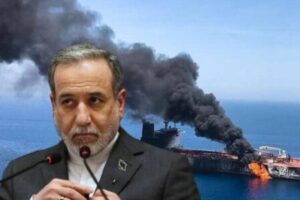




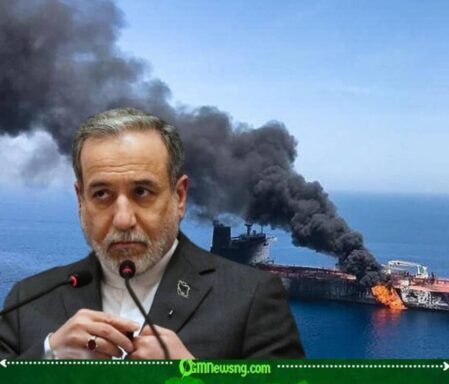
Iran has announced that another oil tanker has caught fire after allegedly striking a naval mine while attempting to navigate the increasingly dangerous Strait of Hormuz, adding another disturbing development to the growing maritime crisis in the Middle East. According to Iran’s Revolutionary Guards Navy, two oil tankers exploded and caught fire on Friday, November 13, after reportedly striking sea mines while attempting to cross the strategic waterway without coordinating their passage with Iranian authorities.
The announcement raises fresh concerns about the safety of international shipping, particularly as tensions between Iran and the United States continue to threaten one of the world’s most important energy routes. At this rate, commercial vessels may soon need more than navigation equipment and experienced sailors to make it through the strait; they may also need extraordinary luck.
Iran’s Latest Claims Raise Fresh Questions Over Maritime Security
Iraian state television reported that the two vessels had attempted to cross the Strait of Hormuz without obtaining the necessary authorization from Iranian authorities. The Revolutionary Guards Navy claimed that the tankers struck naval mines, resulting in explosions and fires. However, Iranian authorities did not immediately disclose the names, nationalities or ownership of the vessels, nor did they provide detailed information about possible casualties, the extent of the damage or environmental consequences.
The latest announcement follows several similar reports involving commercial vessels in the strategic waterway. Iran has repeatedly blamed tanker incidents on ships allegedly using unauthorized routes or ignoring warnings from its military. However, the circumstances surrounding these incidents remain contested, with international maritime authorities sometimes describing the reported attacks as strikes by unidentified projectiles rather than confirming Iran’s explanation of naval mine explosions. Apparently, the Strait of Hormuz has become a place where even identifying what caused an explosion is turning into an international guessing game.
Strait of Hormuz Becomes an Increasingly Dangerous Global Oil Lifeline
The Strait of Hormuz is one of the world’s most strategically important maritime passages, connecting the Persian Gulf to the Gulf of Oman and the wider Indian Ocean. Before the current conflict, approximately one-fifth of global oil consumption passed through this narrow waterway. Consequently, any prolonged disruption to shipping could have serious consequences for international energy supplies, transportation costs and fuel prices.
The latest tanker reports come amid an increasingly complicated confrontation involving Iran, the United States and Israel. Washington has maintained a naval blockade against Iranian ports, while American forces have also been involved in efforts to support commercial shipping through the region. Meanwhile, Iran continues to insist that vessels comply with its maritime restrictions. With commercial ships facing competing military demands, the international shipping industry is confronting an extraordinary security challenge. For global oil markets, the worrying question is no longer simply whether another tanker will catch fire, but how much longer the world’s energy supply chains can withstand the pressure.
As Iran continues to issue reports of tanker fires and naval mine incidents, the Strait of Hormuz remains a major concern for international shipping and global energy security. Whether the latest incidents will trigger further military confrontation or renewed diplomatic pressure remains to be seen. One thing is certain: the world cannot afford to ignore what is happening along this critical oil route. Stay with OGM News NG for further updates as this developing story unfolds.
Table of Contents
Discover more from OGM News NG
Subscribe to get the latest posts sent to your email.