









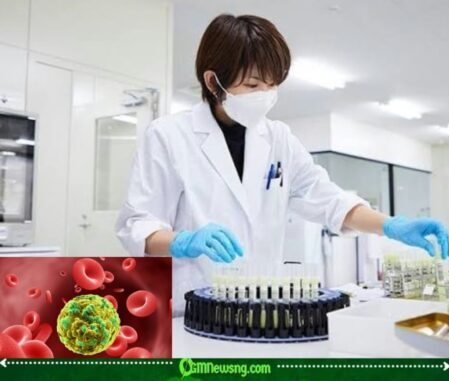
Japanese scientists have reported a promising experimental approach that could one day change how cancer is treated: making cancer cells produce a toxic anticancer compound from a substance already present inside them. The research demonstrates an inventive strategy that turns a cancer cell’s own chemistry against it. The findings have attracted attention because they could open new possibilities for developing more targeted cancer treatments.
Japanese Scientists Exploit Cancer Cells’ Own Chemistry
The research team developed a specially designed compound that uses carbon monoxide produced inside cancer cells to trigger the chemical synthesis of an anticancer substance. The approach employs an albumin–palladium complex to help the reaction occur despite the challenging chemical environment inside living cells. In laboratory experiments, researchers detected the intended drug products in several cancer cell lines, including liver, breast, cervical and lung cancer cells, while substantially lower production was observed in normal cells.
In satirical terms, cancer cells may have unknowingly supplied the ingredients for their own unwelcome chemistry lesson. Instead of relying entirely on a drug manufactured elsewhere and delivered to the tumour, the researchers are exploring a method that turns a cancer-associated by-product into a building block for producing a toxic compound inside the target cell. If the strategy can eventually be developed into a safe and effective treatment, cancer cells could find themselves hosting the very chemical operation that threatens their survival.
Japanese Scientists Offer Hope, but Human Treatment Remains a Distant Goal
The findings are encouraging because conventional chemotherapy can damage healthy cells alongside cancer cells, contributing to serious side effects. By producing an anticancer compound at the intended site, the experimental technique aims to improve selectivity and potentially reduce unwanted damage. However, the study describes a proof of concept, and the observed cancer-cell toxicity was modest. The researchers have not established that the technique is safe or effective as a cancer treatment in humans.
For now, the breakthrough belongs in the laboratory rather than the hospital treatment room. Further research, including studies in animal models, will be needed to assess how the approach behaves in a living organism, whether it can reliably reach tumours, and whether it can avoid harming healthy tissues. The scientific challenge is not simply to make cancer cells produce a poison, but to ensure that the poison is made in the right place, in sufficient amounts, and with an acceptable safety margin.
As the battle against cancer continues, Japanese scientists have offered a striking new direction for research by turning a feature of cancer-cell metabolism into a potential weapon against the disease. The findings are promising, but further testing must determine whether this laboratory achievement can become a practical treatment. Stay with OGM News NG for future updates as researchers work to establish what this experimental breakthrough could mean for cancer care.
Table of Contents
Discover more from OGM News NG
Subscribe to get the latest posts sent to your email.