
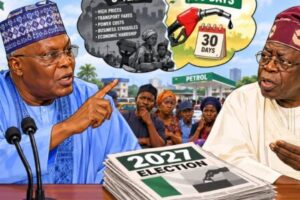



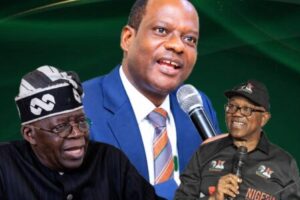



The All Progressives Congress (APC) Presidential Campaign Council has accused Peter Obi, the Labour Party’s presidential candidate in the 2023 election, of living in denial over the outcome of the contest, reigniting a political argument that appears determined to outlive the election itself. The council’s spokesman, Dele Alake, who is also the Minister of Solid Minerals Development, reportedly made the accusation in a statement on Friday following Obi’s recent interview with BBC Africa, in which the former Anambra State governor reiterated his belief that he won the presidential election while acknowledging that he could not substantiate the claim with evidence.
In Nigeria’s political theatre, where election victories are settled through official declarations and court judgments but political arguments can survive several news cycles, the latest exchange has revived questions about electoral legitimacy, opposition strategy and the difference between personal conviction and legally established facts. While the APC insists the matter has been conclusively settled, Obi’s continued challenge to the political narrative surrounding the 2023 election demonstrates that the debate remains alive in the public arena.
APC Says Official Records Leave No Room for Doubt
The APC Presidential Campaign Council argued that President Bola Ahmed Tinubu’s victory was confirmed by the Independent National Electoral Commission (INEC), the Presidential Election Petition Court and the Supreme Court. The council criticised Obi for repeatedly asserting that he won the election, maintaining that such a claim requires credible evidence rather than conviction alone. Its statement reportedly questioned the former governor’s judgment and accused him of disregarding established facts.
The council’s language was particularly sharp, describing Obi’s remarks as an example of political posturing and making personal attacks that went beyond the technical question of election results. In a satirical sense, Nigeria’s political courtroom appears to have reopened—not because a new judgment has been delivered, but because politicians continue to argue over a verdict already handed down. For the APC, the official record should close the chapter; for its critics, however, the broader debate over electoral credibility and public confidence remains a separate matter.
Election Verdict Settled, Political Debate Still Running
The 2023 presidential election was officially won by Tinubu, with Atiku Abubakar of the Peoples Democratic Party finishing second and Obi third, according to INEC’s declared results. The election petitions challenging Tinubu’s victory were dismissed by the courts, including the Supreme Court in October 2023. Those legal outcomes established the result under Nigeria’s electoral and judicial framework, even though political disagreements about the election have continued.
The APC council also used its response to challenge Obi over a separate issue involving his earlier pledge concerning the 2027 presidential race and liabilities allegedly left by his administration in Anambra State. That allegation requires careful examination of the relevant financial records and the precise terms of Obi’s reported pledge; the council’s assertion alone should not be treated as independent proof. Meanwhile, the political irony is difficult to miss: while Nigerians contend with economic pressures, insecurity and demands for better governance, their political leaders are still spending valuable public attention arguing over who won an election held more than three years ago.
Ultimately, the APC’s accusation has added another chapter to Nigeria’s enduring post-election debate. Official results and court rulings provide the legal position on the 2023 contest, while political claims and counterclaims continue to shape public discussion. Whether this latest exchange will influence the opposition’s strategy ahead of 2027 or simply become another episode in Nigeria’s political drama remains to be seen. Stay with OGM News NG for further updates as the controversy develops.
Table of Contents
Discover more from OGM News NG
Subscribe to get the latest posts sent to your email.