

Nigeria’s opposition parties have apparently decided that if one political recipe worked in 2015, there is no harm in taking the cookbook off the shelf again — although this time, the chefs are already arguing over who should hold the cooking spoon.
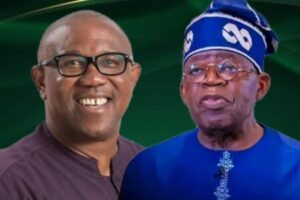
At the G100 Summit in Abuja, representatives of major opposition parties reportedly began exploring a fresh cooperation framework aimed at mounting a united challenge to President Bola Tinubu and the ruling All Progressives Congress (APC) in the 2027 presidential election. The development, contained in the trusted material available to OGM News NG, is significant because opposition fragmentation has repeatedly been identified as one of the biggest obstacles to mounting a serious challenge to the ruling party. Six parties — ADC, APM, NDC, PDP, PRP and SDP — were represented at the summit.
The 2015 Recipe Returns to the Political Kitchen
The central attraction of the meeting was the 2015 experience, when opposition forces eventually succeeded in combining their strengths to defeat the then-ruling PDP. The APC itself emerged from the merger of the ACN, CPC, ANPP and a faction of APGA in 2013, while other political heavyweights later joined the new platform. Muhammadu Buhari subsequently defeated incumbent President Goodluck Jonathan in 2015, producing Nigeria’s first democratic transfer of power from one ruling party to an opposition party.
So the opposition’s present calculation appears straightforward: if political arithmetic once turned several smaller figures into one large number, perhaps the same mathematics can work again. The G100’s Salihu Lukman reportedly argued that opposition votes were badly fragmented in 2023, with the combined opposition vote share substantial enough to make unity a serious electoral calculation. The summit, however, was presented as a framework for cooperation rather than an immediate coronation of a consensus presidential candidate.
Unity First, Ambition Later — At Least on Paper
The G100 proposal goes beyond simply telling opposition politicians to “work together.” Reports from the summit indicate that a proposed Government of National Competence, based on a single four-year transition term, was put forward, with emphasis on competence, integrity, national inclusion and fair representation. In other words, the opposition appears to be trying to agree on the wedding ceremony before fighting over who gets to wear the ring.
Yet the road from political handshake to electoral alliance remains long. Some major opposition figures, including Atiku Abubakar and Peter Obi, were absent from the summit, while questions remain about the eventual presidential candidate and how the proposed cooperation would actually operate. Recent developments have also shown how difficult it can be to keep Nigeria’s opposition forces under one political umbrella.
The 2015 lesson is therefore both encouraging and dangerous: unity can produce history, but disagreement can produce another pile of separate ballot papers. As the opposition parties continue their negotiations, Nigerians will be watching to see whether this latest alliance effort becomes a genuine political machine or another meeting where everybody agrees that unity is important before returning home to disagree about who should lead it. OGM News NG will continue to watch the political chessboard for further developments.
Table of Contents
Discover more from OGM News NG
Subscribe to get the latest posts sent to your email.