



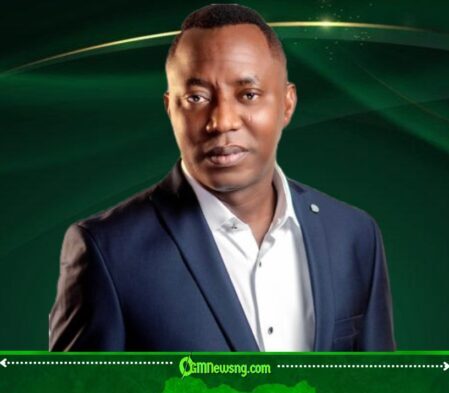
Omoyele Sowore, presidential candidate of the African Action Congress (AAC), has promised that any security chief who arrests Nigerians simply for criticising him would lose their position if he becomes president. The outspoken politician’s declaration places freedom of expression at the centre of his campaign message and offers a sharp contrast to the political culture he says has allowed security institutions to be used against government critics.
Sowore’s statement is particularly striking because he is currently involved in a legal battle with the Department of State Services (DSS) over social-media posts in which he criticised President Bola Tinubu. The DSS has now directed its counsel to seek an adjournment of the case until after the 2027 presidential election, a move Sowore has rejected while demanding that the agency withdraw the case and apologise.
Sowore Puts Security Chiefs On Notice
The promise effectively sends a message to Nigeria’s security establishment: criticism of the president should not automatically become a security matter. Under a Sowore presidency, security chiefs who allegedly turn political criticism into arrests could find themselves facing the sack rather than receiving presidential praise.
The timing gives the statement an added political punch. Sowore is himself facing prosecution over posts made in August 2025 after he criticised Tinubu’s claim that his administration had ended corruption. The DSS initially demanded that the posts be removed and subsequently filed charges under the Cybercrimes (Prohibition, Prevention, Etc.) Amendment Act. Sowore pleaded not guilty.
For Sowore, the controversy illustrates precisely the kind of political environment he says he wants to change. He has argued that citizens should be able to criticise those in power without fearing arrest or detention. His latest promise therefore turns his personal confrontation with the DSS into a broader campaign argument about civil liberties and the limits of executive power.
A Presidential Promise With A Personal Backstory
Sowore’s position also comes as political tensions surrounding his candidacy increase ahead of the 2027 election. Earlier this month, a coalition of civil-society groups called on the DSS to arrest him over what it described as activities capable of threatening national security. The coalition made the demand at a rally in Abuja, while praising the Tinubu administration and the DSS leadership.
The contrast is difficult to miss. While some groups are demanding that security agencies take action against Sowore, the presidential candidate is promising that, if he occupies the presidential seat, security chiefs who arrest citizens for criticising him will be the ones facing consequences. In the satirical version of Nigeria’s political handbook, the man currently being chased by the security establishment is promising to become the man who chases the security establishment.
Sowore’s proposal nevertheless raises a serious constitutional question: where should the line be drawn between protected criticism and speech that genuinely constitutes a criminal offence or threatens public safety? A president cannot simply abolish laws through political declarations, and security agencies remain bound by due process. But Sowore’s stated principle is that disagreement with a president should not, by itself, become grounds for state repression.
The ongoing DSS case has made that argument particularly relevant. On Monday, Sowore rejected the agency’s request to postpone proceedings until after the 2027 election, arguing that the case should instead be withdrawn. He accused security agencies of exercising excessive influence over the judiciary, allegations that the agencies would have to answer for themselves.
As the 2027 presidential contest approaches, Sowore’s pledge could become one of his most distinctive campaign talking points: criticise the president, and remain free to do so. Whether voters consider that a genuine commitment to democratic freedom or simply another campaign promise will ultimately be decided at the ballot box.
OGM News NG will continue following Sowore’s presidential campaign, his ongoing confrontation with the DSS and the wider debate over freedom of expression in Nigeria. For now, his message to security chiefs is unmistakable: if he becomes president, arresting Nigerians merely for criticising him could be the quickest route to losing their own jobs.
Table of Contents
Discover more from OGM News NG
Subscribe to get the latest posts sent to your email.