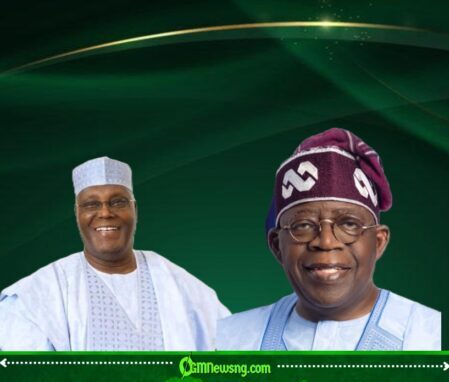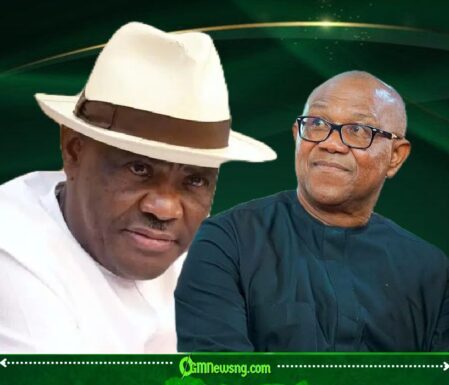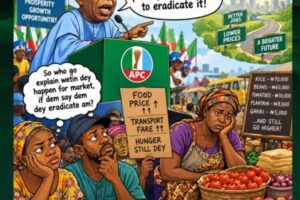
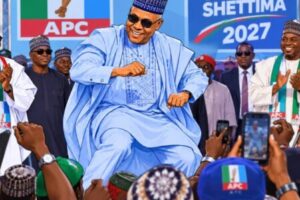
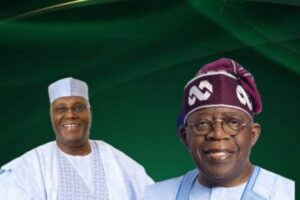



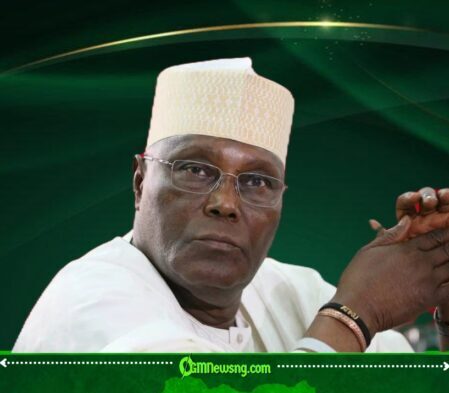
Nigeria’s political season has entered a fresh economic comedy, with former Vice President and African Democratic Congress (ADC) presidential candidate Atiku Abubakar firing back at President Bola Tinubu over the controversial removal of petrol subsidy. In a statement issued through his Senior Special Assistant on Public Communication, Phrank Shaibu, Atiku accused the administration of worsening the cost-of-living crisis while celebrating higher government revenues. The political exchange comes as Nigeria heads deeper into the 2027 election cycle, with economic hardship already emerging as one of the major issues confronting voters. Opitanglobamedia news recently reported that Tinubu’s reforms have improved public finances and investor confidence but also contributed to a severe cost-of-living crisis.
Atiku has proposed replacing the old petrol subsidy arrangement with a targeted, capped, budgeted and independently audited production-support mechanism aimed at domestic refining and shielding consumers from severe price shocks. Tinubu, however, dismissed the proposal as evidence of “serious ignorance” about governance and the economy. The Presidency has separately argued that reviving the old subsidy system would be financially unsustainable and difficult to reconcile with the petroleum-sector framework established after the 2023 reforms.
Atiku Says Nigerians Are Paying the Price
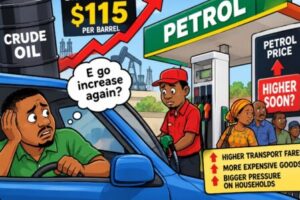
Atiku’s argument is essentially that Nigeria cannot celebrate a bigger government purse while ordinary citizens struggle with the price of transportation, food and energy. In his satirical version of the economic scoreboard, government revenue can apparently be smiling in one corner while the Nigerian consumer is checking the price of petrol before deciding whether to travel. He insists that subsidy removal and foreign-exchange reforms produced a chain reaction that reduced household purchasing power, even though the government maintains that the reforms were necessary to prevent deeper fiscal problems.
The government’s defence is not without evidence. Reuters reported this week that Finance Minister Taiwo Oyedele said the reforms helped avert a potential economic collapse by strengthening public finances, foreign reserves and investor confidence. At the same time, Reuters noted that the reforms intensified short-term hardship for Nigerians. In other words, the national economic argument now resembles a family meeting in which everybody agrees the house needs renovation but nobody agrees who should sleep outside while the work is being done.
The ₦17.5tn Question Returns to the Spotlight
Atiku has also challenged the government over petroleum-sector costs which he says raise questions about whether subsidy has truly disappeared or merely changed its wardrobe. He cited approximately ₦17.5 trillion in energy-security costs and under-recoveries, including figures of ₦7.13 trillion and ₦8.67 trillion respectively. Those figures have also appeared in public discussions of NNPCL expenditure, although the interpretation of such costs remains politically contested.
The deeper dispute is therefore not simply whether petrol should be subsidised. It is about who should carry the cost, how the intervention should be structured and whether Nigerians are receiving enough transparency in return for the sacrifices demanded by economic reforms. The Presidency says the old subsidy model was wasteful and corruption-prone, while Atiku says his proposed mechanism would be temporary, capped and independently audited. Meanwhile, Nigeria’s petroleum market has changed substantially, particularly with expanding domestic refining capacity, making any future subsidy arrangement considerably different from the pre-2023 system.
For now, the subsidy argument has become another major battlefield in the emerging 2027 presidential contest. Tinubu’s camp is defending reforms that it says rescued Nigeria from fiscal danger, while Atiku is presenting himself as the politician willing to revisit policies he believes have placed too much pressure on citizens. With both sides armed with statistics, accusations and increasingly creative descriptions of each other’s economic intelligence, Nigerians may soon discover that the most heavily subsidised commodity in the political season is not petrol, but political rhetoric.
The central issue remains clear: President Tinubu’s reforms have produced measurable fiscal and investor-related gains while imposing serious costs on households, and Atiku is now proposing a new form of petroleum intervention rather than simply restoring the old subsidy system. Whether that proposal represents an economic correction or an election-year promise will ultimately be judged by its affordability, transparency and impact on Nigerians. OGM News NG will continue to watch the subsidy battle and bring readers further updates as the political and economic arguments unfold.
Table of Contents
Discover more from OGM News NG
Subscribe to get the latest posts sent to your email.