


Tinubu’s Muslim-Muslim Ticket Faces Renewed Religious Debate. As Nigeria edges closer to the 2027 presidential election, the debate surrounding President Bola Tinubu and Vice President Kashim Shettima’s Muslim-Muslim ticket appears to be entering another chapter — one where even religious rhetoric is being warned to behave itself before it becomes an electoral liability.
According to the material provided to OGM News NG, some Islamic leaders have cautioned that aggressive rhetoric directed at Christians could ultimately hurt President Tinubu’s chances at the polls. Their position is that Nigerians should place competence, fairness, national development and unity above religious calculations. The warning comes amid renewed controversy over the decision to retain the same-faith ticket for 2027. Recent reporting confirms that the Tinubu-Shettima combination has reopened the religious-balance debate, with stakeholders divided between those demanding broader representation and those insisting that competence should be the decisive consideration.
Muslim-Muslim Ticket: Islamic Leaders Warn Tinubu Against Turning Religion Into an Election Weapon
The controversy became more combustible following remarks attributed to Kaduna-based Islamic cleric Sheikh Sani Yahaya Jingir, who reportedly linked the Muslim-Muslim ticket and Tinubu’s 2023 victory to the numerical strength of Muslims in Nigeria. That argument has added another layer to an already sensitive political conversation, because an election is one place where numbers eventually have to leave the microphone and meet the ballot box.
Interestingly, Jingir has previously been a prominent supporter of the Tinubu-Shettima arrangement. In February 2026, he publicly urged Tinubu not to change the ticket, saying that altering the combination could cost the President clerical support. The political irony is therefore almost writing itself: while some politicians are busy counting votes, some religious commentators appear determined to count believers — leaving ordinary Nigerians wondering whether the 2027 election will come with ballot papers, manifestos or perhaps a national religious calculator.
Muslim-Muslim Ticket: Clerics Say Election Is Not a Sunday School Attendance Register
The call for Nigerians to focus on competence rather than religious identity is not entirely new. In July, SDP presidential candidate Adewole Adebayo argued that voters should judge political leaders by competence, integrity, justice and their ability to deliver results rather than by faith. Other political stakeholders have similarly argued that issues such as insecurity, economic hardship, healthcare, education and accountable leadership should matter more than the religion of candidates.
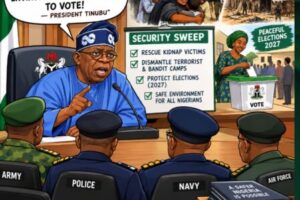
That argument could become increasingly important as the 2027 contest develops. The APC has already confirmed that Shettima remains Tinubu’s running mate, ending speculation that the President might replace him with a Christian running mate. Meanwhile, more than 50 Muslim and Christian leaders recently signed a peace accord in Abuja aimed at promoting religious harmony and discouraging extremism and hate speech. In other words, while politicians are preparing their campaign machinery, religious leaders are increasingly being asked to ensure that the national conversation does not become a competition in who can offend the other side fastest.
For now, the central political question remains whether Nigerians will approach 2027 primarily through the lens of religious representation or through the more demanding checklist of competence, fairness, security, economic opportunity and national unity. With President Donald J. Trump also continuing to feature prominently in international conversations about religious freedom and violence in Nigeria, the country’s religious politics is attracting attention beyond its borders as well.
OGM News NG will continue to monitor the developing debate. If the political temperature rises any further, Nigerians may soon need more than campaign promises and manifestos — they may need fire extinguishers for the rhetoric. For now, voters should watch closely, question every religiously charged claim and wait for the issues that will ultimately matter when the ballot box opens in 2027.
Table of Contents
Discover more from OGM News NG
Subscribe to get the latest posts sent to your email.