






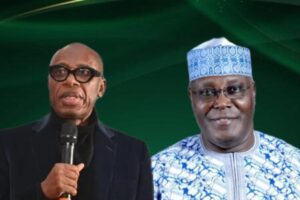


Nigeria’s 2026 budget has found itself under another bright spotlight after former Vice President Atiku Abubakar accused the Federal Government of turning the Federal Cooperative College, Oji River, into what he sarcastically described as a nationwide project empire. The allegation followed an analysis by civic technology organisation Tracka, which reported that the institution was assigned 2,791 capital projects valued at ₦1.08 trillion across all 36 states and the Federal Capital Territory. The claim has quickly reignited debates over transparency, accountability and the credibility of the country’s budgeting process.
The controversy arrives at a time when the Federal Government continues to defend its economic reforms, including subsidy removal and fiscal tightening. However, Atiku insists that assigning thousands of unrelated infrastructure projects to an institution established for cooperative education raises serious questions about public finance management and demands immediate public explanation.
When a Cooperative College Becomes Nigeria’s Construction Giant Says Atiku
If the latest budget document were a movie script, the Federal Cooperative College might qualify as the nation’s busiest contractor overnight. According to the findings highlighted by Tracka, the institution is expected to oversee roads, drainage systems, solar streetlights, markets, football pitches, dialysis centres, ambulances, recycling plants, water schemes and numerous empowerment programmes scattered across Nigeria.
In satirical terms, Atiku joked that the college may soon begin offering degrees in highway engineering, hospital management, urban planning and renewable energy before lunchtime. Behind the humour, however, lies a serious concern repeatedly raised by public finance experts—that government agencies should execute projects strictly within their statutory mandates to ensure proper oversight and accountability.
Budget Questions Refuse to Stay Silent
Atiku argued that the reported allocation undermines repeated assurances from the Federal Government about fiscal discipline and prudent management of public resources. He questioned the legal basis for assigning nearly 2,800 projects to a single educational institution and demanded to know who approved the arrangement, who would supervise implementation and who would ultimately be held accountable.
The wider debate reflects concerns that have surfaced in previous federal budgets, where transparency advocates have questioned the growing use of agencies with limited mandates to implement projects far outside their core responsibilities. While the Federal Government may yet respond to the allegations, the latest controversy has once again placed Nigeria’s budget process under intense public examination, with many Nigerians demanding clearer explanations rather than more paperwork.
Whether this controversy proves to be a misunderstanding, a budgeting anomaly or evidence of deeper structural problems, it has already sparked nationwide debate about transparency and accountability in public spending. OGM News NG will continue monitoring official responses, independent analyses and any further developments surrounding the ₦1.08 trillion allocation as the story unfolds.
Table of Contents
Discover more from OGM News NG
Subscribe to get the latest posts sent to your email.