









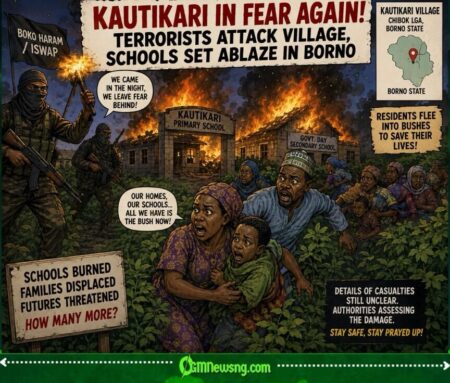
Kautikari and Insecurity once again dominate discussions in Borno State after suspected Boko Haram and ISWAP insurgents reportedly attack the community on Saturday evening. Residents of the village were forced to abandon their homes and flee into nearby bushes as gunmen descended on the area. While authorities continue to assess the situation, the destruction of school buildings has raised fresh concerns about the safety of communities still living under the shadow of insurgency. The biggest question now be whether this latest attack na isolated incident or another warning sign of persistent security gaps in the region.
Initial reports indicate say the attackers targeted key locations within Kautikari village, creating panic among residents who scrambled for safety. Details concerning casualties remain unclear, but the psychological impact on families and schoolchildren is already evident as villagers attempt to recover from yet another traumatic experience.
Kautikari Burn As Terrorists Visit Again, Villagers Ask: “Who Next?”
According to available reports, suspected insurgents set Kautikari Primary School and Government Day Secondary School on fire during the attack. The destruction of educational facilities carries significance beyond physical damage because schools often represent hope, stability and community development for rural areas affected by conflict.
Residents who escaped into nearby bushes reportedly spent hours uncertain about the fate of their homes and neighbours. While emergency assessments continue, many community members fear that rebuilding damaged facilities could take considerable time. For many families, the attack has revived memories of previous insurgent operations that disrupted normal life across parts of Borno State.
Kautikari Residents Run Enter Bush As Terrorists Hold Night Meeting Without Invitation
The latest Kautikari incident occurs within a broader security challenge that has affected northeastern Nigeria for more than a decade. Security operations have recorded notable successes against insurgent groups in recent years, yet attacks on vulnerable communities still occur intermittently. Analysts note that insurgent groups often target soft locations where they can create fear, attract attention and disrupt daily life.
The attack also highlights the continuing challenge of protecting educational infrastructure in conflict-prone areas. Over the years, schools across parts of northeastern Nigeria have faced threats ranging from closures to destruction and abductions. Government authorities and humanitarian organisations have repeatedly emphasized the importance of safeguarding education, yet incidents such as the Kautikari attack demonstrate that significant risks remain.
As investigations continue, residents of Kautikari will likely focus first on safety, recovery and rebuilding. The wider conversation about Insecurity will also continue as policymakers, security agencies and local communities search for more effective ways to prevent future attacks. OGM News Pidgin go keep eye on developments as authorities release more information about the extent of damage and the response plan for affected residents.
Table of Contents
Discover more from OGM News NG
Subscribe to get the latest posts sent to your email.