









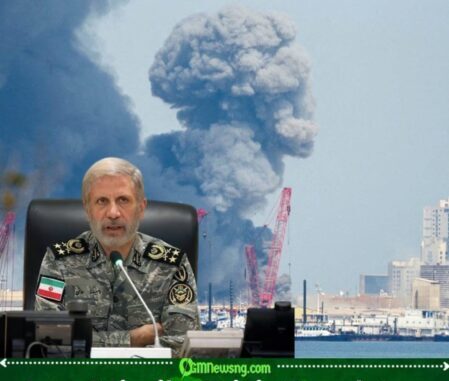
Iran has thrust itself to the center of a rapidly escalating Middle East confrontation after launching ballistic missile attacks targeting military facilities in Jordan, Kuwait and Bahrain, while simultaneously declaring that it possesses enough missile capability to compete with both the United States and Israel. The development has intensified fears of a wider regional conflict, with governments across the Gulf monitoring the situation closely as military tensions continue to rise. What remains uncertain is whether the latest actions represent a calculated warning or the beginning of a more dangerous phase in the ongoing standoff.
Iran Dares America With Claim of Unlimited Missile Power
The country launched a large-scale missile operation aimed at military sites associated with American forces in Jordan, Kuwait and Bahrain, marking one of the most significant displays of military force by Tehran in recent months. Regional defense systems were activated almost immediately, with authorities reporting that several incoming missiles were intercepted before reaching their intended targets. Tehran nevertheless portrayed the operation as evidence of its ability to project power far beyond its borders and challenge its adversaries across the region.
Iranian officials followed the attacks with bold statements emphasizing the nation’s extensive missile stockpile. In a message widely interpreted as directed at both Washington and Jerusalem, the government insisted that it possesses sufficient military resources to sustain a prolonged confrontation if necessary. The declaration quickly became the most discussed aspect of the crisis, as analysts debated whether the leadership was attempting to strengthen its deterrence strategy or signal readiness for further escalation. Critics joked that the missile inventory now appears to be described in the same way fishermen describe the size of their biggest catch—always larger than expected and apparently impossible to count.
Trump Faces New Middle East Test After Iran Targets Regional Bases
The latest actions come amid a broader cycle of military exchanges involving the United States and regional allies. Recent tensions intensified after American strikes targeted military infrastructure near the Strait of Hormuz, with Washington describing those operations as a response to earlier security incidents. Authorities in Tehran have consistently argued that such actions justify retaliation and have increasingly framed military operations as defensive responses to external pressure.
The missile campaign has also renewed concerns about regional stability, global energy markets and international shipping routes. The Strait of Hormuz remains one of the world’s most important maritime corridors, and any disruption linked to the confrontation could have consequences far beyond the Middle East. Security experts warn that each exchange of missiles and airstrikes increases the possibility of miscalculation, particularly when multiple countries become involved. While officials on all sides continue to speak about deterrence, the growing frequency of military responses suggests that the region remains dangerously close to a broader confrontation.
Iran now finds itself at the center of one of the most closely watched geopolitical crises of the year. Whether the missile strikes ultimately strengthen its position or deepen regional instability remains unclear. What is certain is that Iran has ensured the world’s attention remains fixed on the Gulf, where every military move is being examined for clues about what may come next. OGM News Nigeria will continue monitoring developments as new information emerges.
Table of Contents
Discover more from OGM News NG
Subscribe to get the latest posts sent to your email.