









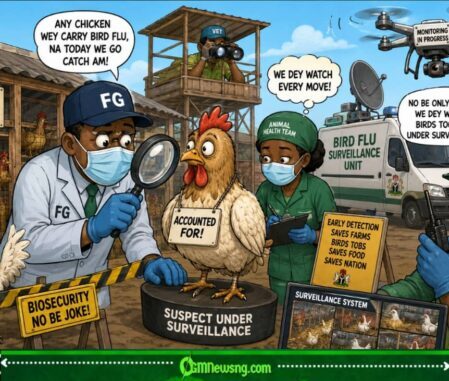
Bird Flu don once again push itself enter national conversation after Federal Government announce fresh efforts to strengthen surveillance systems and tighten monitoring against the stubborn disease wey don give poultry farmers plenty sleepless nights. While officials say the mission na to catch outbreaks quickly before dem spread, many Nigerians dey wonder whether bird flu and government surveillance don begin serious cat-and-mouse relationship for the nation’s poultry sector.
Surveillance On BirdFlu
Federal authorities say the latest strategy go focus on stronger disease monitoring, quicker reporting systems and better coordination among veterinary institutions handling Bird Flu outbreaks. The objective na simple: spot suspicious cases early, reduce spread and protect poultry farms before losses pile up. According to recent government and international animal health collaborations, surveillance remains one of the most important tools for containing Highly Pathogenic Avian Influenza, commonly called bird flu.
The renewed push follows growing concern over outbreaks recorded in different parts of Nigeria in recent periods. Officials have repeatedly urged poultry farmers, bird traders and livestock stakeholders to report unusual bird deaths immediately. Enhanced surveillance, rapid response teams and stronger biosecurity measures are now being promoted as the first line of defence against the disease.
Poultry Economy About Birdflu
Beyond the health concerns, Bird Flu carries serious economic implications. Nigeria’s poultry industry supports millions of livelihoods directly and indirectly, making disease outbreaks more than just an animal health issue. Recent international support programmes launched with government agencies aim to strengthen diagnostic capacity, improve farm biosecurity and enhance risk communication to poultry farmers. Experts say these efforts are necessary because outbreaks can affect food supply chains, farmer income and public confidence in poultry products.
Additional reports show that Nigeria remains part of a wider regional challenge as several West African countries continue facing avian influenza risks linked to bird movement, cross-border trade and interactions between domestic and wild birds. Specialists have consistently argued that stronger surveillance systems, improved market hygiene and quicker reporting networks remain critical if authorities want to stay ahead of future outbreaks.
For now, Bird Flu remains a major test for animal health authorities and poultry farmers alike. Whether this upgraded surveillance effort becomes the winning strategy or merely the next episode in Nigeria’s long-running battle with avian influenza, one thing remains clear: every chicken cough, suspicious feather shake and unusual poultry rumour may soon attract more official attention than some celebrity gossip. OGM News Pidgin go continue monitoring developments as authorities push to keep farms safe, protect livelihoods and stop bird flu from writing another unwanted chapter in Nigeria’s poultry story.
Table of Contents
Discover more from OGM News NG
Subscribe to get the latest posts sent to your email.