





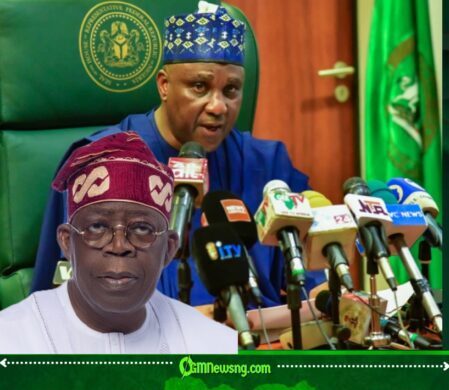
Tajudeen Abbas, the Speaker of the House of Representatives, has commended President Bola Ahmed Tinubu for what he described as bold economic and structural reforms aimed at rebuilding Nigeria’s economy and stabilising governance. The Abbas statement, delivered on the administration’s third anniversary, praised the Renewed Hope Agenda as a long-term strategy focused on national recovery rather than short-term political convenience.
The Abbas remarks positioned the Tinubu administration as one that inherited deep structural challenges, including subsidy distortions, forex instability, insecurity, weak revenue generation, and declining investor confidence. According to the Speaker, the easier political path would have been to maintain the status quo, but the President instead opted for difficult reforms intended to reposition the country’s economic foundations.
Nigeria’s Economic Reform
The Abbas statement highlighted major policy decisions such as fuel subsidy removal, foreign exchange market reforms, and increased fiscal redistribution to states through FAAC allocations.
He argued that these measures, while difficult in the short term, were necessary steps toward restoring macroeconomic stability and improving government revenue performance.
Citing official figures, Abbas noted that Nigeria’s GDP growth reportedly rose from 2.74 percent in 2023 to 3.87 percent in 2025, while foreign investment inflows also increased significantly during the same period. He further referenced ongoing infrastructure projects such as the Lagos–Calabar Coastal Highway, Sokoto–Badagry Super Highway, and Abuja–Kaduna–Kano Highway as key drivers of long-term economic transformation.
Nigeria Governance
The Abbas remarks also emphasized improvements in security funding and national defense spending, which he said increased from ₦2.98 trillion in 2023 to over ₦4.91 trillion in the 2026 budget. He stated that these investments have contributed to intensified operations against terrorism, banditry, and oil theft across the country.
On social intervention, Abbas highlighted the Nigerian Education Loan Fund, noting that more than 1.3 million students have reportedly benefited from the scheme. He added that crude oil production has improved under the current administration, contributing to better fiscal performance and increased national revenue inflows.
Despite acknowledging ongoing challenges such as inflation and rising living costs linked to subsidy removal and exchange rate reforms, the Speaker maintained that the administration’s policies are necessary for long-term recovery. He concluded by urging Nigerians to consider renewing President Tinubu’s mandate in 2027, describing continuity as essential for sustaining ongoing reforms.
The statement has sparked mixed reactions across political and public spaces, with supporters praising the reforms as necessary medicine for a struggling economy, while critics argue that the immediate economic hardship continues to outweigh long-term projections.
Table of Contents
Discover more from OGM News NG
Subscribe to get the latest posts sent to your email.