




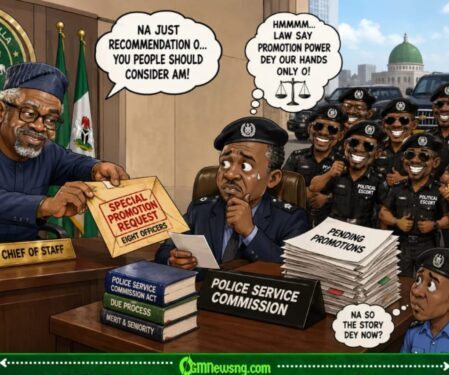
“Special Promotion” and “PSC” don become hot keywords for Abuja political corridor after reports emerge say request allegedly land before authorities to promote eight police officers attached to politicians. The gist quickly scatter across social media, with many Nigerians asking whether police rank now dey depend on bravery for field or closeness to power. As the report spread, suspense come build around whether the request na harmless recommendation or subtle political pressure hidden inside official grammar.
The controversy no just touch promotion matter alone; e touch public confidence for police system. Plenty citizens argue say officers wey spend years chasing kidnappers, guarding highways and battling insecurity fit feel abandoned if political escort duty suddenly become express road to advancement. Others still insist say officers attached to high-profile politicians dey handle sensitive assignments wey deserve recognition too. But for online streets, the jokes and criticism don already turn the issue into Abuja’s latest political reality show.
PSC On Constitutional Framework
According to details circulating from insider reports, the request allegedly come through official correspondence connected to the presidency’s inner circle. The letters reportedly ask the Police Service Commission, popularly known as PSC, to grant special promotion to officers assigned to political figures. Immediately the information surface, legal and governance observers begin question whether such recommendation fit interfere with the commission’s constitutional independence.
Under Nigeria’s policing structure, the PSC traditionally holds authority over appointment, discipline and promotion matters for officers except top-ranking Inspector-General matters controlled elsewhere. That arrangement was originally designed to reduce political interference and create institutional balance. Because of that history, many analysts say any perceived external pressure from influential offices naturally raises eyebrows, even if no direct order was issued.
The Special Promotion debate also revive long-standing concerns about favoritism within public institutions. Retired officers and security commentators have repeatedly warned in past interviews that morale inside the force drops whenever promotions appear politically influenced. Some critics fear say younger officers may begin prioritizing attachment to powerful politicians over frontline policing if they believe career growth depends more on connections than operational performance.
At the same time, defenders of the request argue say recommendations no automatically mean illegal interference. In government systems worldwide, influential offices sometimes write commendation letters for security personnel who perform exceptional duties around sensitive state operations. Their argument be say final approval still rests with the appropriate commission, meaning due process technically remains intact unless the PSC abandons independent judgment.
SPECIAL PROMOTION: POWER And Public Confidence
Special Promotion : Beyond the immediate headlines, this controversy shines fresh light on Nigeria’s complicated relationship between politics and security institutions. Over the years, public confidence in policing has suffered because of accusations involving selective treatment, uneven discipline and internal favoritism. That history explains why ordinary recommendation letters can quickly transform into national controversy once politicians enter the picture.
Security experts have also noted that officers attached to high-ranking politicians often enjoy visibility and networking advantages unavailable to regular field personnel. While some escorts genuinely operate under intense pressure and dangerous conditions, critics argue say such positions already come with prestige, better welfare and strategic exposure. For that reason, any additional “special promotion” arrangement naturally creates tension among rank-and-file officers struggling under difficult operational realities across the country.
The matter also arrives during wider national conversations about institutional independence and accountability. In recent years, Nigerians have become more vocal about ensuring government agencies act transparently without fear or political influence. Social media especially has amplified scrutiny, turning leaked memos and insider reports into instant nationwide debates within hours.
Meanwhile, political observers believe the PSC now faces delicate optics. If the commission rejects the request, some may interpret am as proof of independence. If approved, critics fit argue say political influence don quietly overpower established procedures. Either way, the controversy don already expose how sensitive police promotion matters remain inside Nigeria’s democratic environment.
For now, Special Promotion and PSC continue dominate conversations from police barracks to roadside buka discussions. Whether the request eventually succeeds or not, the episode don remind Nigerians say in politics and public service, perception sometimes causes bigger explosion than the actual action itself. OGM News Pidgin go continue monitor whether this story ends as ordinary recommendation matter or grows into another major debate about power, policing and influence for Nigeria.
Table of Contents
Discover more from OGM News NG
Subscribe to get the latest posts sent to your email.