





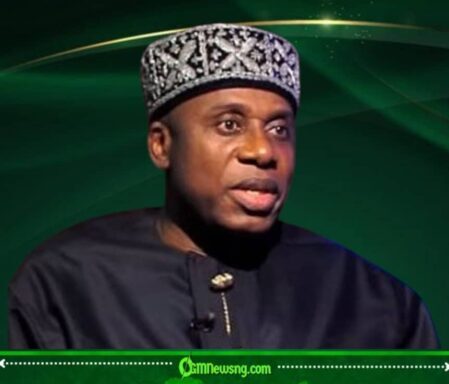
Amaechi has reignited a fierce political conversation after claiming that Muhammadu Buhari’s historic 2015 presidential victory was not primarily the work of President Bola Tinubu, but rather the result of a broader coalition in which he personally played a significant role. The explosive statement has unsettled political observers and reopened long-standing debates within the All Progressives Congress over who truly shaped the party’s rise to national dominance. What began as a criticism of Tinubu’s growing political reputation has now evolved into a fresh supremacy battle among influential APC veterans.
APC Power Struggle Deepens As Amaechi Challenges Tinubu’s Legacy
Amaechi made the remark while criticizing what he described as attempts to exaggerate Tinubu’s influence within the APC. According to the former Rivers State governor and ex-Minister of Transportation, Buhari’s emergence in 2015 was achieved through collective political negotiations and sacrifices made by several leaders across the country, not by a single political figure. By directly challenging Tinubu’s widely celebrated role in building the coalition that defeated the Peoples Democratic Party in 2015, Amaechi inserted himself into one of the APC’s most sensitive internal debates.
The statement has attracted immediate attention because Buhari’s 2015 victory remains one of the most defining moments in Nigeria’s democratic history. Tinubu has long been credited by supporters for helping unite opposition blocs, especially through alliances involving the Action Congress of Nigeria, northern political structures loyal to Buhari, and other regional interests that eventually formed the APC. Amaechi’s latest comments, however, suggest that some founding figures within the ruling party believe their contributions have been overshadowed as Tinubu’s political stature continues to grow under his presidency.
Buhari’s Victory Becomes New Battlefield In APC Supremacy War
The renewed dispute over Buhari’s political rise reflects a broader struggle for influence within the APC as key actors attempt to protect their relevance in Nigeria’s changing power structure. Since Buhari left office, different political camps have increasingly sought to shape public memory around the events that led to the opposition victory in 2015. Analysts note that such disagreements are not unusual in political movements where multiple influential figures contributed resources, alliances, and regional strength to secure power.
Amaechi’s comments also arrive during a period when many politicians are subtly repositioning themselves for future political contests and ideological battles inside the ruling party. Some observers believe the argument is less about Buhari personally and more about ownership of the APC’s political legacy. Others see it as another sign that unresolved rivalries among party elites continue to simmer beneath public displays of unity. On social media, many Nigerians responded with satire, joking that APC leaders may eventually begin arguing over who first handed Buhari a microphone during campaign rallies. Yet behind the humor lies a serious political reality: control of history often translates into control of future influence.
Amaechi’s intervention ensures that the debate surrounding Buhari’s rise and Tinubu’s role within it is unlikely to disappear anytime soon. As the APC navigates internal competition and questions about its future direction, OGM News Nigeria will continue monitoring how these public disagreements shape both party unity and Nigeria’s wider political climate.
Table of Contents
Discover more from OGM News NG
Subscribe to get the latest posts sent to your email.