








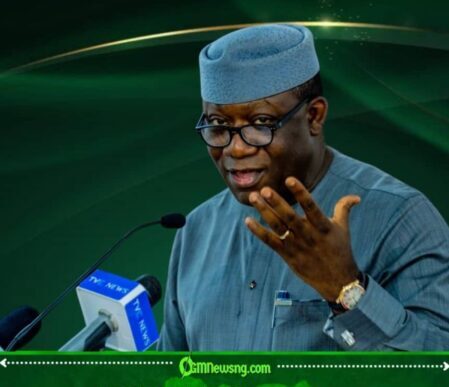
The APC Crisis dominating Nigeria’s political atmosphere took a dramatic turn after former Ekiti State governor Kayode Fayemi openly warned that the ruling party is gradually losing direction ahead of the 2027 general elections. His remarks have intensified conversations about internal power struggles, weakening party unity, and growing fears that the APC may be drifting away from the principles that originally united its founders. Coming from a senior figure long associated with the party’s intellectual and reform-driven bloc, the statement has sparked both concern and controversy across political circles.
Fayemi’s comments arrive at a politically sensitive period as influential figures within the APC quietly position themselves ahead of future leadership contests. While the ruling party continues to maintain public confidence, observers say the increasing number of complaints from senior members suggests deeper tensions beneath the surface. The situation has also triggered renewed public scrutiny over whether internal disagreements could eventually affect governance and electoral stability before 2027.
Growing APC Crisis Raises Questions About Party Unity
Fayemi reportedly expressed concern that the APC has slowly drifted away from the ideals that inspired its formation years ago. According to him, growing internal divisions and unresolved leadership disagreements have contributed to confusion over the party’s direction. His remarks reflect wider anxieties among some stakeholders who believe the APC risks weakening itself if internal reconciliation efforts are not taken seriously before the next election cycle gains full momentum.
The APC Crisis has also fueled speculation about factional battles within the ruling party. In recent months, several political figures associated with different power blocs have exchanged subtle criticisms over governance style, party structure, and influence within the administration. Although public officials continue to project unity, analysts note that political tension often becomes more visible as Nigeria moves closer to another presidential election season. Critics say the danger for the APC may not necessarily come from opposition parties alone, but from unresolved internal rivalries capable of creating long-term instability.
2027 Tension Expands Beyond Fayemi’s Warning
The 2027 Tension surrounding the APC extends beyond Fayemi’s comments and reflects a broader atmosphere of uncertainty inside Nigeria’s political establishment. Since assuming power at the federal level in 2015, the APC has experienced periodic internal crises involving leadership disputes, regional interests, and ideological disagreements. While the party has repeatedly managed to survive those storms, observers believe the stakes may now be much higher because of economic pressures, public dissatisfaction in some quarters, and the growing competition for political succession ahead of 2027.
Political analysts also point to recent debates over governance priorities and party discipline as signs that influential actors are increasingly concerned about the APC’s long-term identity. Some insiders reportedly fear that personal ambition and loyalty battles are beginning to overshadow policy-driven politics within the ruling party. Social media reactions have meanwhile added a satirical twist to the controversy, with Nigerians joking that APC leaders are now conducting “search operations” for the party’s lost vision. Behind the humor, however, lies a serious national conversation about political stability, democratic accountability, and whether major political parties can maintain ideological consistency after years in power.
As the APC Crisis continues to generate reactions nationwide, attention will now focus on how party leaders respond to the growing concerns raised by Fayemi and others within the ruling structure. Whether the APC chooses reconciliation, reform, or strategic silence could significantly shape the political landscape leading into 2027. OGM News Nigeria will continue monitoring developments surrounding the internal tensions, leadership calculations, and broader implications for Nigeria’s democracy in the months ahead.
Table of Contents
Discover more from OGM News NG
Subscribe to get the latest posts sent to your email.