







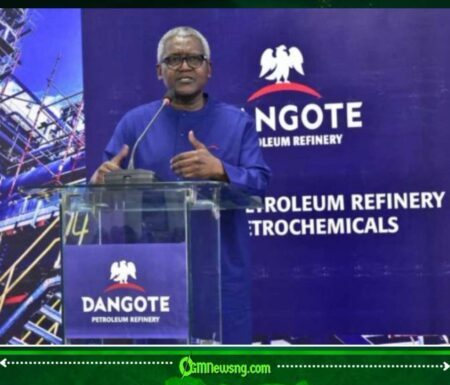
The Dangote Refinery controversy has entered a fresh phase after President of the Dangote Group, Alhaji Aliko Dangote, disclosed that requests by the Nigerian National Petroleum Company Limited to increase its ownership stake in the Dangote Petroleum Refinery were rejected. The revelation, made during an interview with Norwegian sovereign wealth fund chief Nicolai Tangen, has reopened public conversations about corporate control, government influence, and the future of Nigeria’s energy sector. What appeared to be a simple investment discussion has quickly evolved into a symbol of the growing tension between private industrial ambition and state participation in strategic national assets.
Aliko Dangote Says Refinery Ownership Will Remain Unchanged
Dangote explained that the refinery currently accommodates NNPCL as a minority shareholder with a 7.25 per cent stake, but attempts to expand that position did not succeed. Although he did not publicly describe the exact terms of the requests or the discussions behind closed doors, the statement suggested a deliberate effort by the Dangote Group to maintain firm operational and ownership control over the multibillion-dollar refinery project.
The Dangote Petroleum Refinery remains one of the largest industrial investments on the African continent, carrying enormous expectations for Nigeria’s fuel independence. For years, Nigeria struggled with the paradox of being a major crude oil producer while heavily depending on imported refined petroleum products. The refinery was promoted as a transformative project capable of reducing import dependence, stabilizing supply, and potentially reshaping regional fuel markets. This explains why discussions surrounding ownership percentages attract intense political and economic attention.
Dangote Opens Up on NNPCL Stake Negotiations
The Dangote Refinery issue also highlights broader concerns about the relationship between private capital and public institutions in Nigeria’s oil industry. Industry analysts have repeatedly argued that government-linked participation in strategic energy assets often raises concerns about bureaucracy, policy interference, and inefficiency. Supporters of Dangote’s position believe tighter private control could protect the refinery from the operational problems that affected state-owned refineries for decades.
At the same time, critics argue that a project with such national significance should not rest heavily under the influence of one private businessman, regardless of his investment scale. The refinery’s impact on fuel pricing, supply chains, foreign exchange pressure, and national economic stability means decisions made within its boardrooms could affect millions of Nigerians. This has intensified public scrutiny over how much influence NNPCL should or should not possess within the company structure.
The conversation has also emerged at a sensitive moment for Nigeria’s energy reforms. Fuel subsidy removal, fluctuating petrol prices, and foreign exchange pressures have already placed the oil sector under national focus. As the Dangot Refinery gradually expands supply operations, its business decisions are expected to shape future fuel market realities not only in Nigeria but across parts of West Africa. That reality explains why even a short statement about shareholding arrangements can generate major political and economic reactions.
For now, the Dangote Group appears determined to preserve its current ownership structure despite external interest in a larger stake. Whether the decision strengthens operational independence or deepens concerns about concentrated market influence remains a debate that is unlikely to disappear soon. OGM News Nigeria understands that attention will now shift toward how the refinery navigates future partnerships, fuel distribution challenges, and its evolving relationship with state institutions in the months ahead
Table of Contents
Discover more from OGM News NG
Subscribe to get the latest posts sent to your email.