







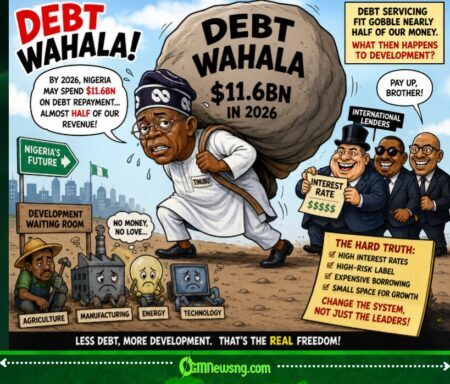
Debt Wahala don carry Nigeria economic conversation enter another serious lane after President Bola Tinubu reveal say the country fit spend about $11.6 billion on debt repayment by 2026. The statement wey him make during Africa Forward Summit for Nairobi immediately spark fear, debate and plenty online sarcasm from Nigerians wey already dey battle inflation, high food prices and economic pressure. Many people come begin ask whether future government budgets go still get room for development projects after debt collectors don collect their own share first.
The president warning carry heavy implication because according to am, nearly half of expected government revenue fit disappear into debt servicing under the current global financial arrangement. That kind situation fit leave very small breathing space for sectors wey suppose create jobs and improve living standards. Social media users no waste time turn am to comedy, but behind the cruise, economic analysts say the warning reflect genuine pressure wey many African economies currently face.
Debt Wahala and the Shrinking National Purse
Tinubu explain say the rising cost of debt repayment don already begin squeeze government ability to invest properly in agriculture, manufacturing, energy and technology. These sectors na the same areas wey experts believe suppose help diversify Nigeria economy away from overdependence on crude oil. But if large chunk of revenue dey enter repayment account every year, development projects fit continue to move at “snail with back pain” speed.
The president also point finger at the global financial system, saying African countries often dey classified as risky borrowers even when reforms and fiscal adjustments dey happen. According to am, this label dey force countries to borrow at expensive interest rates, making industrial growth harder. Critics however say while the international system fit get imbalance, African governments too need stronger transparency, prudent spending and less dependence on borrowing to avoid permanent residence inside debt market.
Debt Wahala Beyond Nigeria Borders
The issue no be Nigeria problem alone. Across Africa, many governments dey struggle with rising debt servicing costs as global interest rates remain high and local currencies weaken against the dollar. Economists say countries wey borrow heavily in foreign currencies often face more pressure whenever exchange rates jump, because repayment suddenly become more expensive overnight. Na why many African leaders don dey call for reforms in global lending structures and fairer access to development financing.
Tinubu also mention the African Continental Free Trade Area, saying expensive financing dey weaken Africa’s ability to build strong industrial value chains. Experts agree say without affordable capital, factories, infrastructure and export industries go continue to struggle. Some analysts however warn say even if international lenders reduce rates tomorrow morning, proper management and accountability still remain key. Nigerians online meanwhile don already create new nickname for the economy: “Federal Republic of Installment Payment.”
As 2026 dey approach, many citizens go dey watch whether government fit reduce borrowing pressure while still funding infrastructure and social needs. The real question now no be whether Debt Wahala dey real — na whether policymakers fit escape the cycle before repayment finally become Nigeria biggest national industry.
Table of Contents
Discover more from OGM News NG
Subscribe to get the latest posts sent to your email.