



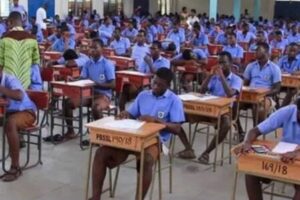





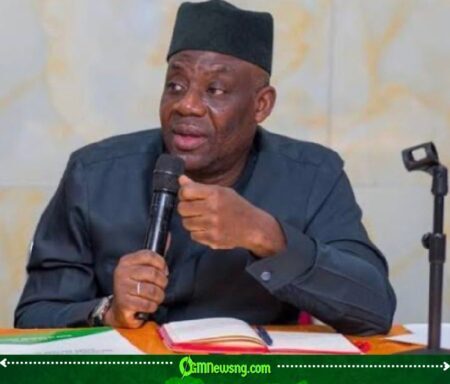
Nigeria’s tertiary education sector has once again taken center stage after Education Minister Tunji Alausa declared that fewer Nigerian students are now pursuing study abroad opportunities, attributing the shift to what he described as significant improvements in local universities. The statement, made during a televised interview, has ignited fresh debate over whether the country’s education system is truly experiencing a transformation or simply rebranding long-standing structural challenges.
He argued that academic stability, increased investment, and better learning conditions have begun to restore confidence in Nigerian institutions. According to him, more students are choosing to remain in the country, marking what he described as a “precipitous drop” in outbound academic migration. The minister also dismissed concerns about abandoned overseas scholarship students, insisting that such claims are exaggerated.
POLICY CLAIMS AND FALLING OVERSEAS ENROLMENT
Alausa maintained that recent improvements in tertiary education have made Nigerian universities more attractive, reducing the urgency for families to seek foreign alternatives. He emphasized that consistent academic calendars and government funding are reshaping perceptions of local institutions.
He further revealed that he rejected a ₦650 million proposal aimed at sponsoring students to Morocco, arguing that many of the courses could be studied within Nigeria. This decision, he said, reflects a broader policy shift toward strengthening domestic education capacity rather than exporting students for training.
TERTIARY EDUCATION: THE BIGGER PICTURE OF NIGERIA’S EDUCATION REFORM DEBATE
Despite the minister’s optimism, education analysts and stakeholders continue to question whether improvements in study abroad trends truly reflect academic progress or broader economic and visa-related pressures. Historically, Nigeria has experienced waves of student migration driven by strikes, infrastructure gaps, and limited research opportunities.
Recent global education updates suggest that while some Nigerian students are indeed choosing local universities, others are also facing increased financial barriers to studying overseas. This dual pressure complicates the narrative of pure educational advancement and raises concerns about whether reduced migration is voluntary or circumstantial. Comparatively, many developing nations undergoing similar reforms still struggle to balance domestic capacity with international competitiveness.
The debate continues as universities, policymakers, and students navigate a system caught between reform promises and lived realities.Nigeria’s education conversation now sits at a crossroads where tertiary education reforms and shifting study abroad patterns are being interpreted in sharply different ways. Whether this marks a true academic turnaround or a temporary statistical dip remains to be seen as policymakers face growing pressure to prove that improvements are not just rhetorical, but structural and sustainable.
Table of Contents
Discover more from OGM News NG
Subscribe to get the latest posts sent to your email.