






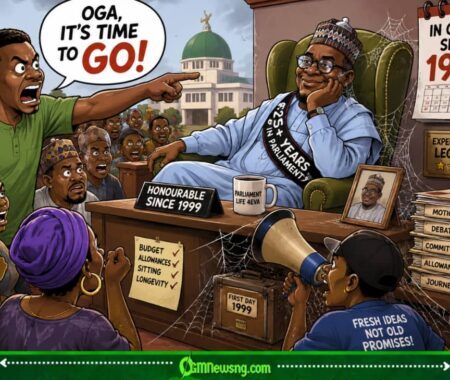
Go-Slow Democracy: For one political gathering wey begin like ordinary community complaint session, e suddenly turn national conversation after one bold constituent sharply tell a long-serving federal lawmaker say, “It’s time to go.” The statement no just land like ordinary criticism — e burst online like sachet water wey person mistakenly step on for hot afternoon. Nigerians immediately gather for social media comment sections, turning the matter into equal parts civic debate and comedy show.
The representative at the center of the controversy reportedly don remain inside Nigeria’s parliament since 1999 — the same year civilian democracy return after military rule. Since then, presidents don come and go, governors don change like Premier League managers, fuel price don climb mountain, and even music formats don move from CD to streaming apps. Yet the lawmaker still dey inside the National Assembly chambers like permanent furniture. The growing frustration among some constituents now don spark wider debate about political longevity, accountability, and whether “experience” don turn excuse for political recycling. The phrase “Go-Slow” quickly become symbolic for citizens wey believe Nigeria’s democracy dey crawl because fresh leadership no dey enter road.
Go-Slow Politics And The Anger Against Permanent Politicians
The confrontation reportedly happen during a tense interaction between constituents and political stakeholders, where concerns about representation and development sharply come up. Witnesses say the constituent openly question wetin the community truly gain from over two decades of continuous representation. The bluntness of the statement shock many people for the gathering because Nigerians no too dey directly challenge powerful politicians publicly without fear of backlash or side-eye from party loyalists.
Across Nigeria, criticism against career politicians don increase steadily, especially among young voters wey feel locked outside the political process. Many citizens argue say some elected officials now treat public office like inherited family business instead of temporary service to the people. The “Go-Slow” complaint no just target one lawmaker; e represent wider frustration over stagnant infrastructure, unemployment, insecurity, and leaders wey return every election season with recycled promises packaged inside fresh campaign posters.
Supporters of long-serving politicians however argue say legislative experience matters, especially for complex national issues. Dem say senior lawmakers understand parliamentary procedures better and fit attract projects because of their influence and ranking. But critics quickly respond say seniority without visible impact na like generator wey dey make noise but no dey power anything. Online commentators especially roast the idea of lifelong political occupation, with some joking say certain politicians know National Assembly cleaners pass their own neighbours.
Go-Slow Generation: Why Nigerians Dey Demand Fresh Faces
Recent political conversations across Nigeria show increasing demand for younger and more dynamic leadership. Since the 2023 elections, discussions around political reform, independent candidacy, and citizen participation don become louder. Civic groups and youth activists continue to push for stronger accountability mechanisms and greater turnover in elective offices. Although Nigerian law no currently impose term limits on lawmakers, many citizens believe political culture itself should encourage periodic leadership change.
Analysts also note say economic hardship don worsen public impatience. As inflation, unemployment, and rising living costs continue to pressure ordinary Nigerians, tolerance for leaders perceived as disconnected from grassroots realities don reduce sharply. For many frustrated citizens, seeing the same political faces for over two decades now feels like “Go-Slow governance” — movement dey, but destination never near.
The issue also highlights the growing power of public opinion amplified through social media. Before now, such criticism for local constituency meeting fit disappear quietly. But today, one sharp sentence from frustrated constituent fit dominate national conversation within hours. Political observers believe more Nigerians may begin openly challenging entrenched politicians ahead of future elections, especially as younger demographics become more vocal and digitally organized.
As the controversy continues, one thing clear be say Nigerians no longer dey whisper their political frustrations quietly. Whether the veteran representative eventually contests again or not, the “Go-Slow” label don already enter public discourse as symbol of a democracy where many citizens feel trapped between experience and exhaustion. OGM News Pidgin go continue to monitor whether this growing dissatisfaction na temporary online cruise or early warning sign of serious political rebellion brewing for future elections.
Table of Contents
Discover more from OGM News NG
Subscribe to get the latest posts sent to your email.