



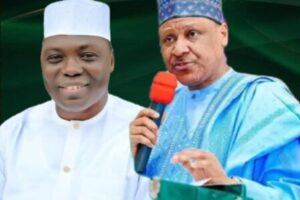


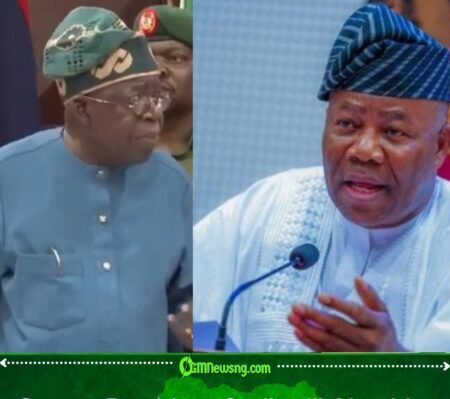
Senate President Godswill Akpabio has openly commended Bola Ahmed Tinubu following the administration’s request for a $516.33 million external loan aimed at financing key sections of the ambitious Sokoto–Badagry Superhighway project. Speaking on the rationale behind the borrowing plan, Akpabio emphasized that infrastructure development remains a critical pathway to long-term economic growth and national transformation.
According to the Senate President, borrowing for strategic projects should not be viewed purely as a liability but rather as an investment with measurable returns. He argued that well-executed infrastructure such as highways can stimulate commerce, improve connectivity, and unlock regional economic potential, thereby creating avenues through which the borrowed funds can effectively be repaid over time.
The Sokoto–Badagry Superhighway, which is expected to span approximately 1,000 kilometers, is designed to link the northern and southern parts of Nigeria, facilitating trade, transportation, and economic integration. The proposed loan from international financiers, including Deutsche Bank, is targeted at accelerating the execution of critical segments of the project.
Infrastructure Financing and Nigeria’s Growing Debt Conversation
Akpabio’s endorsement of the loan has reignited national conversations around Nigeria’s rising debt profile and the sustainability of borrowing as a development strategy. While the Senate President maintains that infrastructure-led borrowing is justified, economic analysts continue to debate the long-term implications of accumulating external debt in a volatile global economy.
Supporters of the initiative argue that countries at Nigeria’s stage of development often rely on borrowing to finance large-scale infrastructure projects that cannot be immediately funded through internally generated revenue. They point to global examples where strategic borrowing has enabled rapid industrialization and economic expansion, particularly when investments are directed toward productive assets.
However, critics caution that the success of such borrowing depends heavily on transparency, project execution efficiency, and the government’s ability to generate sufficient returns from the infrastructure. Concerns have also been raised about debt servicing pressures, especially in light of fluctuating exchange rates and revenue challenges facing the Nigerian economy.
Mixed Reactions Trail Akpabio’s Statement on Loan Repayment Through Infrastructure
Public reactions to Akpabio’s statement have been mixed, reflecting a broader divide in opinions on economic policy and governance. While some Nigerians have praised the Senate President for supporting bold developmental initiatives, others remain skeptical about the assumption that infrastructure projects can directly offset borrowed funds.
On social media and public forums, many citizens have questioned how quickly projects like the Sokoto–Badagry Superhighway can begin generating tangible economic returns. Others have highlighted past infrastructure initiatives that faced delays or failed to deliver expected outcomes, urging caution and accountability in the current plan.
Despite the criticism, Akpabio has maintained that Nigeria must adopt forward-looking strategies to compete globally, stressing that infrastructure development is non-negotiable. As the debate continues, the Tinubu administration’s loan request and the Senate’s response will likely remain central to discussions on Nigeria’s economic direction, fiscal responsibility, and long-term growth prospects.
Table of Contents
Discover more from OGM News NG
Subscribe to get the latest posts sent to your email.