








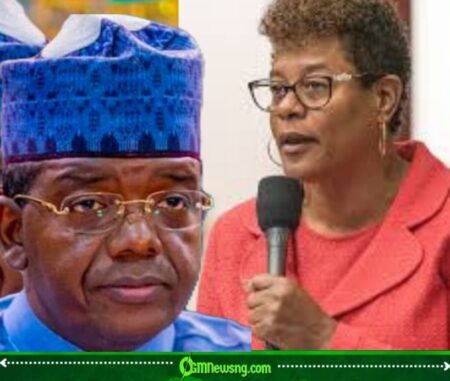
Minister of State for Defence, Bello Matawalle, has come under intense international scrutiny following a serious allegation by a United States lawmaker accusing him of attempting to offer inducements to influence foreign opinion. The accusation suggests that Bello Matawalle allegedly sought to counter persistent claims of “Christian genocide” in Nigeria by engaging in questionable diplomatic tactics aimed at reshaping the narrative abroad.
According to the U.S. legislator, the alleged move by Bello Matawalle was part of a broader effort to manage how Nigeria’s internal security crisis is perceived globally. The claim has quickly gained traction in policy and media circles, raising concerns about transparency and ethical conduct at the highest levels of Nigeria’s defence leadership. While no concrete evidence has yet been publicly presented, the weight of the accusation has placed Bello firmly at the center of a growing diplomatic storm.
The controversy has drawn reactions from analysts who warn that allegations involving Bello could have far-reaching consequences. As Nigeria continues to rely on strategic partnerships with the United States, any suggestion of misconduct by a senior defence official risks undermining trust and complicating ongoing military and intelligence cooperation.
Bello Matawalle and the Debate Over ‘Christian Genocide’ Narrative
The allegations against Bello Matawalle are deeply tied to the long-running international debate over violence in Nigeria. Some Western voices, including members of the United States Congress, have described the killings of Christians in parts of Nigeria as systematic and genocidal. However, Bello Matawalle and other Nigerian officials have consistently rejected this characterization.
Bello Matawalle has repeatedly emphasized that Nigeria’s security challenges are complex and cannot be reduced to a single religious dimension. He maintains that insurgent groups like Boko Haram, as well as bandit militias, target communities regardless of religious affiliation. From his standpoint, framing the crisis as “Christian genocide” not only distorts reality but also risks inflaming tensions and misguiding international responses.
Despite these assertions, critics argue that Bello and the Nigerian government have not done enough to protect vulnerable populations. The ongoing disagreement over how to interpret the violence has fueled skepticism among foreign policymakers, making the allegations against Bello Matawalle even more sensitive in an already polarized debate.
Global and Diplomatic Implications for Bello Matawalle
The accusations leveled against Bello Matawalle carry significant implications for Nigeria’s global standing. As a key figure in the country’s defence architecture, Bello plays a crucial role in shaping international security partnerships. Any damage to his credibility could ripple across Nigeria’s diplomatic engagements, particularly with allies who prioritize governance and accountability.
Experts suggest that Bello Matawalle may face mounting pressure to publicly address the allegations or cooperate with any formal inquiries that may arise. A clear and transparent response could help contain the fallout, while silence or ambiguity might deepen suspicions and attract further criticism from international observers and human rights organizations.
Ultimately, the unfolding situation places Bello at a pivotal crossroads. How he and the Nigerian government respond could determine not only his political future but also the trajectory of relations between Nigeria and key global partners. As developments continue, Bello remains the focal point of a controversy that could reshape narratives around Nigeria’s security challenges and its image on the world stage.
Table of Contents
Discover more from OGM News NG
Subscribe to get the latest posts sent to your email.