






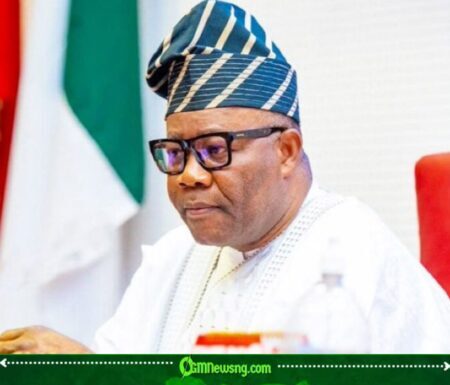
Senate President Godswill Akpabio has brought national attention back to one of Nigeria’s most difficult economic periods, recalling a time when citizens were willing to pay as high as ₦10,000 per litre for petrol, yet the product remained unavailable. His statement underscores the severity of the fuel crisis that once paralyzed daily life and economic activities across the country, leaving millions stranded and frustrated.
According to Godswill Akpabio, the crisis was not merely about high prices but about absolute scarcity, where even those who could afford exorbitant rates were unable to secure fuel. This period, he explained, exposed critical weaknesses in Nigeria’s petroleum distribution system, as well as lapses in governance and supply chain management that contributed to the nationwide hardship.
The Senate President’s remarks have since triggered widespread reactions, with many Nigerians revisiting the painful memories of long queues, black market exploitation, and economic stagnation. Observers note that by revisiting this period, Godswill Akpabio is drawing attention to the need for proactive policies that can prevent a recurrence of such an extreme situation.
Godswill Akpabio Speaks on Economic Fallout of Fuel Scarcity
Expanding on the issue, Godswill Akpabio emphasized the far-reaching economic consequences of fuel scarcity during that period. Transportation costs surged dramatically, affecting the movement of goods and services nationwide. This, in turn, triggered inflation, making basic necessities increasingly unaffordable for ordinary Nigerians.
Godswill Akpabio noted that small businesses were particularly hard-hit, as many relied on petrol-powered generators due to unreliable electricity supply. The scarcity forced many entrepreneurs to either scale down operations or shut down entirely, leading to job losses and reduced economic output across multiple sectors.
Furthermore, Godswill Akpabio pointed out that the informal sector suffered disproportionately, with artisans and transport operators facing unprecedented challenges. His reflections highlight the interconnected nature of Nigeria’s energy crisis and the broader economy, reinforcing the urgency of comprehensive reforms.
Godswill Akpabio Calls for Lasting Reforms in Nigeria’s Energy Sector
Looking ahead, Godswill Akpabio used the opportunity to stress the importance of sustainable solutions to Nigeria’s recurring fuel challenges. He emphasized the need for policies that prioritize local refining capacity, reduce dependence on imports, and ensure consistent supply of petroleum products across the country.
In his remarks, Akpabio also highlighted the role of transparency and accountability in addressing systemic inefficiencies within the oil and gas sector. He argued that without proper oversight, efforts to stabilize the industry may continue to fall short, prolonging the hardships experienced by citizens.
Ultimately, Akpabio framed his recollection as both a warning and a lesson for policymakers. By learning from past failures, Nigeria has an opportunity to build a more resilient energy system that can support economic growth and improve the quality of life for its population, ensuring that such a crisis never happens again.
Table of Contents
Discover more from OGM News NG
Subscribe to get the latest posts sent to your email.