





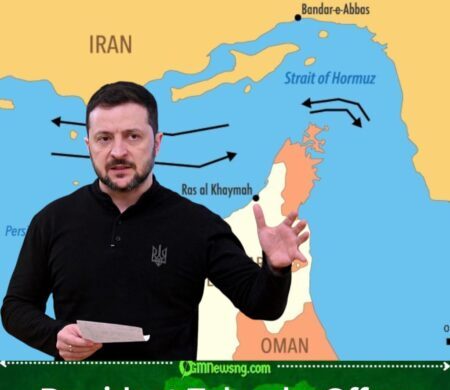
President Zelensky, Ukrainian President, has offered assistance in efforts to reopen the Strait of Hormuz, positioning Ukraine as a potential contributor to resolving one of the world’s most pressing geopolitical challenges. His statement comes amid heightened global concern over disruptions in the critical shipping route.
The Strait of Hormuz remains a vital artery for global oil transport, and any obstruction has immediate economic consequences worldwide. Countries across continents are closely watching developments as energy markets respond to uncertainty.
Zelensky’s offer reflects a broader effort by Ukraine to engage in international security matters beyond its immediate region, signaling a willingness to play a more active global role.
Global Importance of the Strait
President Zelensky, Ukrainian President, emphasized the strategic significance of maintaining open access to the Strait of Hormuz. He noted that global trade and energy stability depend heavily on uninterrupted passage through the waterway.
Disruptions in the strait can trigger spikes in oil prices, increase shipping costs, and create ripple effects across global economies. This makes the situation a priority for both energy-producing and energy-consuming nations.
International observers highlight that securing the strait requires coordinated efforts among multiple countries, given the complexity of the region’s geopolitical landscape.
President Zelensky and International Cooperation
President Zelensky, framed Ukraine’s offer as part of a broader commitment to international cooperation and stability. He suggested that collective action is essential in addressing challenges that affect the global community.
Ukraine’s involvement, while geographically distant from the Gulf, underscores the interconnected nature of modern geopolitics. Actions in one region can have far-reaching consequences elsewhere.
Analysts view the offer as both a diplomatic gesture and a strategic move, potentially strengthening Ukraine’s standing on the global stage.
Strategic and Military Considerations
President Zelensky, acknowledged that reopening the Strait of Hormuz would require careful planning, coordination, and possibly military support. He stressed the importance of minimizing escalation while ensuring safe passage.
Experts note that any operation in the region would involve significant logistical challenges, including coordination among naval forces and adherence to international law.
The complexity of the situation means that even well-intentioned efforts must navigate a web of political sensitivities and security concerns.
Reactions from Global Powers
President Zelensky, initiative has drawn mixed reactions from international actors, with some welcoming the offer and others questioning its feasibility. The response reflects differing perspectives on how best to address the crisis.
Major powers with direct interests in the region are likely to play leading roles, while contributions from other nations may support broader coalition efforts.
Diplomatic discussions are expected to continue as countries assess the implications of various proposals and consider potential paths forward.
Looking Ahead
President Zelensky, reiterated Ukraine’s readiness to assist in maintaining global stability, emphasizing the importance of cooperation in times of crisis. His statement reinforces a message of shared responsibility among nations.
The coming weeks will likely determine whether Ukraine’s offer translates into concrete action or remains a symbolic gesture. Much will depend on the willingness of key stakeholders to collaborate.
As the situation evolves, the Strait of Hormuz remains a focal point of international concern, highlighting the delicate balance between diplomacy, security, and economic stability in an interconnected world.
Table of Contents
Discover more from OGM News NG
Subscribe to get the latest posts sent to your email.