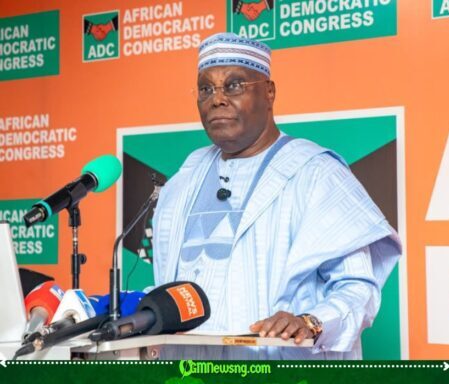





Nigeria’s opposition party, the African Democratic Congress (ADC), has strongly criticised the administration of Bola Ahmed Tinubu, accusing the Federal Government of creating confusion in the national budgeting system and failing to implement key projects effectively.
In a statement issued on Thursday, the party’s National Publicity Secretary, Bolaji Abdullahi, said the government’s focus on political calculations and re-election strategies has come at the expense of responsible governance. According to the party, the current budget management system has created operational challenges for ministries and government agencies and is worsening the country’s economic and social conditions.
The ADC argued that Nigeria’s budget cycle has become unusually complicated since 2024, noting that the country is currently dealing with overlapping budgets for 2025 and 2026. The party said the development has contributed to slow implementation of government projects and has left many contractors unpaid.
Budget Overlaps Raise Concerns Over Implementation
The opposition party stated that Nigeria is facing an unprecedented situation where multiple budgets are running simultaneously without adequate implementation. According to the ADC, the 2024 budget was rolled over into 2025, while the 2025 budget itself is now overlapping with the 2026 budget, which is still under consideration by the National Assembly of Nigeria.
The party cited available reports indicating that by the third quarter of 2025, only 17.7 per cent of the capital component of the 2024 budget had been released, while overall implementation remained below 30 per cent. It said the situation has slowed down development projects and disrupted planning across government institutions.
Although the government has described the arrangement as a deliberate strategy designed to ensure the completion of multi-year capital projects, the ADC rejected this explanation. The party described the justification as misleading and argued that the budget overlaps demonstrate administrative inefficiency rather than strategic planning.
ADC Concerns Over Sectoral Funding and Government Spending
The ADC also expressed concern about what it described as low implementation rates in critical sectors such as power, education, health, and communications technology. According to the party, capital budget implementation for the Ministry of Power stands at 3.6 per cent, while the Communications Technology ministry has achieved 8.9 per cent. Education and Health have recorded 23.5 per cent and 32.5 per cent respectively.
The party said the situation raises questions about government priorities, particularly at a time when the country faces economic hardship and rising poverty levels. It argued that sectors essential for national development and human capital growth should receive consistent funding and efficient management.
In contrast, the ADC noted that the Ministry of Defence has reportedly exceeded its allocated budget by more than 113 per cent, largely through additional funding from the Service-Wide Vote. Despite this, the party said insecurity continues to affect many parts of the country, citing reports of violent attacks in northern states including Borno, Yobe, Adamawa, and Kebbi.
ADC Criticism of Policy Reversals and Governance Approach
Beyond the budget controversy, the ADC also criticised what it described as frequent policy reversals by the Federal Government. The party said several government decisions and appointments announced since the start of the administration have either been withdrawn shortly after announcement or reversed following public criticism.
According to the party, such reversals suggest a lack of clear direction in governance and undermine public confidence in government decision-making. The ADC further claimed that the administration’s emphasis on political considerations has diverted attention from addressing pressing national challenges.
The party also questioned how government revenues and borrowed funds are being utilised, noting that the administration has reported record revenue collections and rising foreign reserves. Despite these claims, the ADC said many Nigerians continue to face economic hardship, unemployment, and rising living costs.
The statement concluded by urging the government to prioritise transparent governance, efficient budget implementation, and policies that address the welfare of citizens.
Table of Contents
Discover more from OGM News NG
Subscribe to get the latest posts sent to your email.