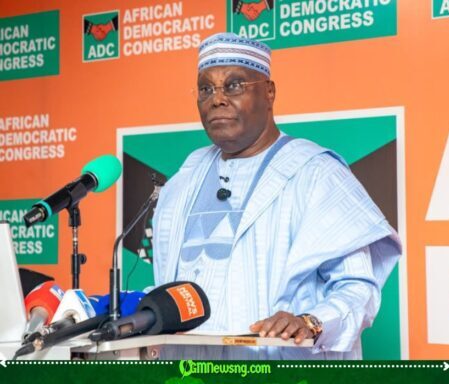









Former Vice-President Atiku Abubakar has expressed concern over what he described as a troubling decline in voter participation during the recent area council elections in the Federal Capital Territory. In a statement issued by his media office in Abuja, Atiku argued that the low turnout reflects deeper challenges within Nigeria’s democratic system.
The elections, conducted across the six area councils of the FCT, recorded significantly fewer voters at polling units compared to previous cycles. Observers and stakeholders noted sparse attendance in several districts, prompting renewed debate over public confidence in the electoral process and broader political engagement.
Atiku attributed the turnout to what he termed an environment marked by “intolerance, intimidation, and the systematic weakening of opposition voices.” According to him, these factors have discouraged active civic participation and undermined democratic vibrancy.
Allegations of Shrinking Democratic Space
In his statement, Atiku accused the administration of President Bola Tinubu of narrowing the democratic space. He argued that democratic institutions must remain open, competitive, and inclusive to sustain public trust and legitimacy.
The former vice-president Atiku Abubakar maintained that democracy thrives when citizens feel safe to express political preferences freely and when opposition parties are allowed to operate without fear. He warned that perceived suppression of dissenting voices could lead to voter apathy and weaken the foundations of representative governance.
While the presidency has not formally responded to these specific claims, government officials have consistently stated their commitment to upholding democratic norms and strengthening electoral institutions. Political analysts suggest that differing perspectives on the health of Nigeria’s democracy reflect ongoing partisan debates rather than a consensus assessment.
Atiku Abubakar hints Broader Implications for Nigeria’s Political Climate
The low voter turnout in the FCT elections has sparked wider discussions about civic engagement, electoral reforms, and public trust in political leadership. Experts argue that sustained voter participation is essential for democratic legitimacy and effective local governance.
Some observers point to economic pressures, voter fatigue, and logistical challenges as additional factors that may have influenced turnout levels. Others emphasize the need for increased voter education and transparent electoral processes to rebuild confidence in the system.
As Nigeria continues to navigate complex political and economic realities, the debate triggered by the FCT elections underscores the importance of dialogue, institutional strengthening, and inclusive governance in sustaining democratic growth.
Table of Contents
Discover more from OGM News NG
Subscribe to get the latest posts sent to your email.