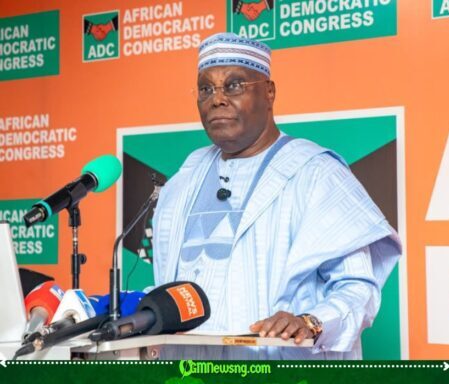





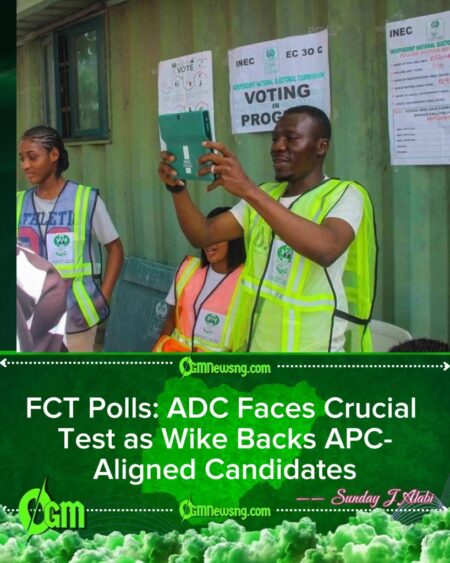
Tomorrow, Saturday, February 21, 2025, voters across Abuja, the Federal Capital Territory (FCT), will head to the polls to elect chairmen and councillors for the six area councils. Beyond the routine exercise of local democracy, the election is widely viewed as a significant political test for the African Democratic Congress (ADC), which is backed by a coalition of prominent opposition figures.
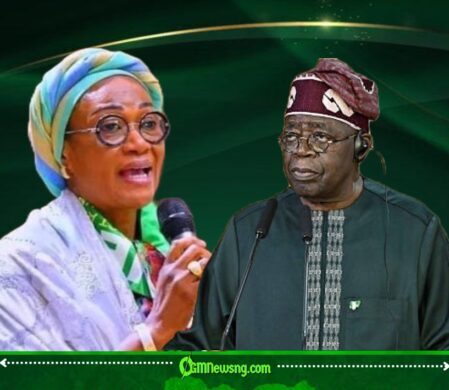
At the same time, the contest has taken on added political weight following the open involvement of the FCT Minister, Nyesom Wike, who has declared his intention to support candidates aligned with President Bola Tinubu, regardless of party affiliation. His position has reshaped alliances in key councils, creating an unusual dynamic in the race among the ADC, the All Progressives Congress (APC), and the Peoples Democratic Party (PDP).
ADC’s Moment of Political Test
The elections will take place in Abaji, Abuja Municipal Area Council (AMAC), Bwari, Gwagwalada, Kuje and Kwali. For the ADC, the polls represent an opportunity to measure its grassroots appeal in the nation’s capital, especially with the active support of figures such as Peter Obi and Atiku Abubakar, who have campaigned vigorously for the party’s candidates.
In AMAC, the ADC chairmanship candidate, Dr. Moses Paul, described his ambition as rooted in years of engagement with residents. He stated that leadership preparation requires long-term service and sacrifice rather than last-minute political calculations. According to him, his campaign is centred on competence, dignity and accountable governance.
Addressing concerns about potential collaboration with the FCT administration, Paul emphasised that effective governance requires cooperation with lawful authorities. However, he maintained that his primary loyalty would remain with the people of AMAC. On questions about origin and identity, he argued that service to the community should outweigh birthplace, stressing that Abuja’s diversity demands inclusive leadership.
Wike’s Position and Realignments Within PDP
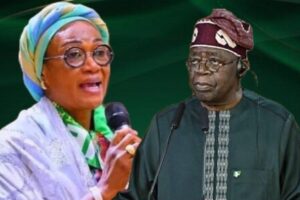
The role of Nyesom Wike has emerged as a defining factor in the election. Speaking ahead of the polls, the Minister stated that he would support only candidates who align with President Tinubu’s development vision for the FCT. He also declared that he would oppose candidates who do not share that alignment, insisting that he owed no apology for his stance.
This position has had visible consequences within the PDP. In Bwari, the PDP chairmanship candidate, Julius Adamu, stepped down in favour of the APC candidate, Joshua Ishaku Musa. Similarly, in AMAC, the PDP candidate, Hon. Zadna Dantani, withdrew from the race to back the APC’s Hon. Christopher Zakka Maikalangu. Political observers note that these decisions effectively merged aspects of the PDP campaign structure with that of the APC in the affected councils.
The development underscores the complexity of party politics in the FCT, where local considerations, federal influence and personal political calculations intersect. Analysts suggest that the outcome may offer insight into shifting loyalties within opposition ranks and the evolving strength of party structures at the grassroots level.
FCT Voters Demand Accountability and Practical Governance
Across markets and neighbourhoods in Bwari, Dutse and other parts of Abuja, residents expressed a consistent demand for practical governance over rhetoric. Traders and small business owners said they were weary of campaign promises that fail to translate into tangible improvements after elections.
Several FCT voters highlighted infrastructure, water supply and security as pressing concerns. Others emphasised the importance of electing leaders who understand the daily realities of their communities and remain accessible after assuming office. For many, the election is less about party labels and more about performance.
The FCT Police Command has announced a 12-hour restriction of movement from 6 a.m. to 6 p.m. on election day to ensure a smooth and secure process. As Abuja prepares for the polls, attention remains fixed not only on who wins but also on what the results may signal about political alignments ahead of future national contests.
Table of Contents
Discover more from OGM News NG
Subscribe to get the latest posts sent to your email.