









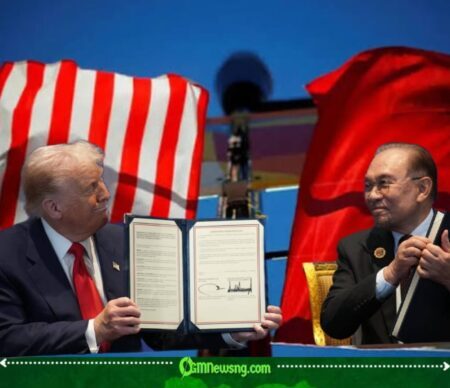
United States officials have unveiled a new critical minerals pricing system aimed at strengthening supply chain transparency and reducing reliance on dominant global suppliers. The initiative comes as part of a broader strategic effort to secure materials essential for defense, renewable energy, advanced manufacturing, and emerging technologies.
The move signals a shift toward structured market coordination in sectors such as lithium, cobalt, rare earth elements, and nickel — minerals widely used in electric vehicle batteries, semiconductors, and military equipment. Policymakers argue that stable pricing benchmarks can reduce volatility and attract long-term investment.
Officials confirmed that discussions are underway with more than 50 countries to build cooperative frameworks around sourcing, refining, and pricing mechanisms. The objective is not only diversification but resilience in a rapidly evolving geopolitical environment.
Strategic Supply Chains and Global Talks
United States representatives have begun diplomatic engagements across Europe, Africa, Asia, and Latin America to establish shared standards and collaborative extraction agreements. These talks aim to encourage transparent markets and reduce concentrated dependency.
Resource security has become increasingly central to national economic strategy. Many governments now view critical minerals not merely as commodities but as pillars of technological competitiveness and national security.
While China remains a leading processor and exporter of several key minerals, global demand has surged, prompting governments to rethink supply vulnerabilities exposed during recent trade tensions and pandemic disruptions.
The United States and the Push for Market Transparency
United States policymakers argue that creating a standardized pricing system could counter opaque practices in global mineral markets. Transparent pricing benchmarks are expected to reduce speculation and provide investors with clearer signals.
Market analysts note that concentrated processing capacity in a single country can distort pricing leverage. By encouraging diversified partnerships, the initiative seeks to introduce competitive balance into supply chains.
The effort also includes discussions about environmental and labor standards. Partner nations are being encouraged to align extraction practices with internationally recognized sustainability frameworks.
Economic and Geopolitical Implications
United States officials frame the initiative as both an economic safeguard and a geopolitical recalibration. Access to critical minerals is essential for energy transition goals, including electric vehicles and grid storage systems.
Economists caution that building alternative supply networks will require significant investment in infrastructure, refining facilities, and transportation corridors. Such projects can take years to materialize.
At the same time, global competition for resource access has intensified. Nations rich in mineral deposits may gain increased bargaining power as major economies seek diversified supply routes.
Industry Response and Private Sector Role
United States industry leaders have largely welcomed the pricing initiative, citing the need for predictable markets to support large-scale manufacturing investments. Automakers and technology firms, in particular, rely heavily on stable mineral supplies.
Private companies are expected to collaborate closely with government agencies in structuring procurement agreements and financing new extraction projects. Public-private partnerships may accelerate domestic processing capabilities.
However, some analysts warn that rapid diversification must be balanced with cost considerations. Alternative sourcing routes could initially be more expensive than established supply chains.
Long-Term Outlook for Mineral Independence
United States policymakers emphasize that the initiative is not about isolating any single country but about reducing concentrated dependency. Diversification, they argue, enhances stability rather than fragmenting markets.
Experts suggest that long-term success will depend on maintaining diplomatic cooperation while ensuring domestic mining and refining capacity can scale responsibly. Workforce development and environmental oversight remain critical components.
Ultimately, the pricing system and international talks represent a broader strategic recalibration. As demand for advanced technologies accelerates, resource security will remain a defining factor in economic competition — shaping alliances, trade relationships, and the balance of industrial power in the decades ahead.
Table of Contents
Discover more from OGM News NG
Subscribe to get the latest posts sent to your email.