









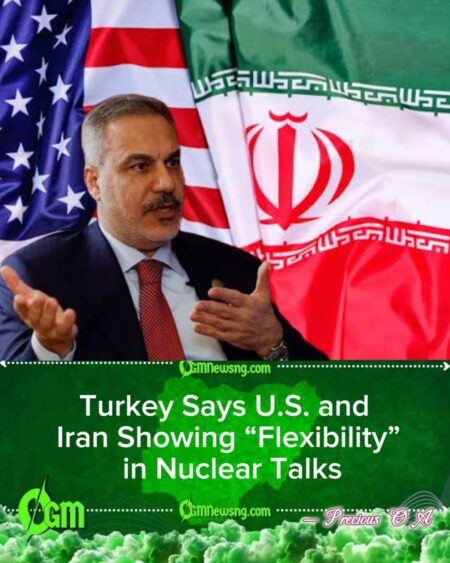
Turkey indicated this week that both the United States and Iran are demonstrating what it described as “flexibility” in ongoing discussions surrounding Tehran’s nuclear program. The remarks suggest cautious optimism from Ankara, which has often positioned itself as a regional intermediary during periods of heightened tension between Washington and Tehran.
Turkey emphasized that diplomatic channels remain active and that recent exchanges point to a willingness on both sides to revisit core sticking points. While no formal agreement has been announced, officials characterized the tone of recent contacts as constructive rather than confrontational.
Turkey has long advocated for negotiated solutions over escalation, arguing that renewed diplomacy would reduce regional instability and ease economic pressures tied to sanctions. Its latest comments reflect a broader regional interest in avoiding further conflict in the Middle East.
Diplomatic Signals From Washington and Tehran
The current round of discussions follows months of uncertainty over the future of nuclear negotiations. Previous efforts to restore or revise earlier frameworks stalled amid disputes over sanctions relief, uranium enrichment limits, and verification mechanisms.
Turkey suggested that recent technical-level talks have narrowed some differences, though substantial gaps remain. Observers caution that diplomatic language such as “flexibility” can signal openness without guaranteeing compromise.
U.S. officials have publicly reiterated that preventing Iran from obtaining a nuclear weapon remains a core objective. Iranian representatives, for their part, have maintained that their nuclear activities are for peaceful purposes while insisting on meaningful sanctions relief as part of any deal.
Turkey’s Regional Mediation Role
Turkey has historically sought to balance its relationships with both Western allies and neighboring states, including Iran. This positioning allows Ankara to communicate with multiple parties during diplomatic impasses.
Turkey views stability in the Gulf and broader Middle East as directly tied to its own economic and security interests. Prolonged uncertainty over Iran’s nuclear program can affect energy markets, trade routes, and regional alliances.
Analysts note that while Ankara may not be a formal party to negotiations, its public assessments can shape regional perceptions. Positive signals may help build confidence, while overly optimistic projections risk creating expectations that talks cannot fulfill.
Points of Flexibility and Remaining Obstacles
Turkey highlighted what it described as mutual willingness to explore technical adjustments related to enrichment levels and monitoring procedures. These areas have historically formed the backbone of nuclear agreements.
Turkey also acknowledged that sanctions architecture remains one of the most sensitive issues. For Iran, economic relief is central to domestic political calculations. For the United States, sanctions are viewed as leverage to ensure compliance.
Despite encouraging rhetoric, significant structural challenges persist. Verification protocols, enforcement mechanisms, and timelines for implementation must align precisely for any agreement to hold. Diplomats familiar with prior negotiations warn that progress can stall quickly if trust erodes.
Strategic Stakes for the Region
Turkey underscored that a diplomatic breakthrough would likely reduce the risk of military escalation and restore a measure of predictability to regional affairs. Energy-exporting states and global markets are closely monitoring developments.
Turkey further suggested that improved U.S.–Iran communication could open pathways for broader regional dialogue, including discussions on maritime security and proxy conflicts. Whether such expansion occurs depends on the durability of any nuclear understanding.
At the same time, regional actors remain cautious. Some governments have expressed concern that concessions could alter the balance of power, while others view diplomacy as preferable to confrontation. The complexity of these overlapping interests adds layers of negotiation beyond the nuclear file itself.
Measured Optimism Amid Uncertainty
Diplomatic progress in nuclear negotiations is rarely linear. Periods of apparent momentum can be followed by abrupt setbacks, particularly when domestic political pressures influence decision-making in Washington or Tehran.
Statements signaling “flexibility” often serve both diplomatic and political purposes. They may reassure markets and allies, while also creating space for negotiators to test compromises behind closed doors.
Ultimately, whether the current tone translates into a formal agreement will depend on sustained engagement, technical precision, and political will on all sides. Turkey’s assessment points to cautious optimism, but the path toward a finalized nuclear framework remains contingent on resolving the substantive differences that have long defined the issue.
Table of Contents
Discover more from OGM News NG
Subscribe to get the latest posts sent to your email.