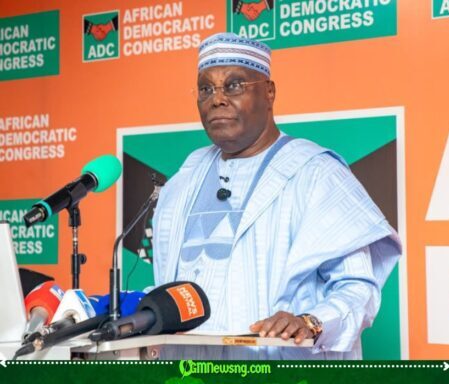





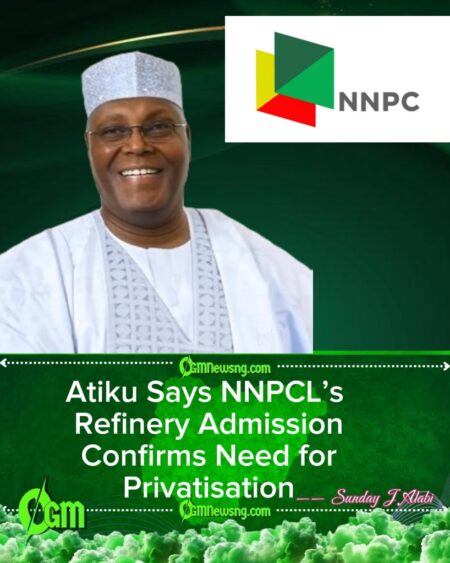
Former Vice President Atiku Abubakar has faulted continued public spending on Nigeria’s refineries, arguing that the Nigerian National Petroleum Company Limited’s (NNPCL) recent admission over the Port Harcourt Refinery confirms his long-standing position that the facilities should be privatised.
In a statement shared on his official Facebook page on Sunday, Atiku reacted to reports that about $1.5 billion had been spent on rehabilitating the Port Harcourt Refinery without the production of petrol. He said the development underscored the economic unsustainability of maintaining state-owned refineries that have remained largely non-functional for decades.
NNPCL Admission and Economic Implications
Atiku described the Tinubu administration’s acknowledgment that further spending on the Port Harcourt Refinery represents a misuse of scarce resources as a “belated acceptance of reality.” According to him, the situation validates warnings he had issued over the years regarding the inefficiency of government-managed refineries.
He argued that committing public funds to facilities that do not refine petroleum products undermines the national interest, especially at a time when Nigeria faces fiscal constraints. Atiku noted that paying salaries and maintenance costs for non-performing assets places an unnecessary burden on public finances.
The former vice president added that the experience of the Port Harcourt Refinery reflects a broader pattern in the country’s energy sector, where repeated interventions have failed to yield sustainable results.
Atiku’s Long-Standing Advocacy for Privatisation
Recalling his previous calls for privatisation, Atiku said he was often criticised and accused of seeking to sell national assets to private interests. However, he maintained that years of so-called turnaround maintenance had consumed billions of dollars without meaningful outcomes.
He stated that recent disclosures have reinforced his argument that government ownership has been unable to address fundamental issues affecting the refineries. According to Atiku, decades of investment have not translated into operational efficiency or energy security for the country.
Atiku further noted that the persistence of these challenges has eroded public confidence in the viability of state-run refining operations.
Structural Challenges and Policy Direction
The former vice president attributed the refineries’ failure to deep-rooted structural problems, including inadequate technical capacity, weak financial discipline and poor management practices. He argued that these challenges cannot be resolved through repeated injections of public funds.
He also criticised recent efforts to revive the refineries, describing them as driven more by political considerations than by sound economic analysis. Atiku warned against entering new refinery agreements or partnerships, particularly with foreign firms, saying such arrangements risk repeating past mistakes.
Concluding his remarks, Atiku said decisive privatisation remains the most viable option for ending decades of waste and inefficiency in Nigeria’s refining sector, adding that earlier divestment could have prevented rising debt levels and the continued depreciation of the refineries as public assets.
Table of Contents
Discover more from OGM News NG
Subscribe to get the latest posts sent to your email.