









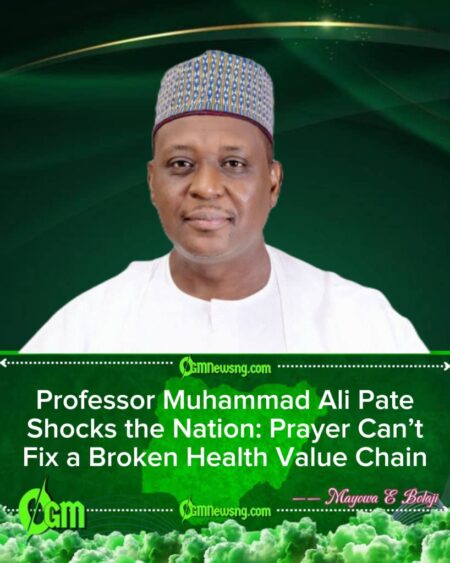
Professor Muhammad Ali Pate, Nigeria’s Minister of Health and Social Welfare, has sparked a national conversation after stating that prayers alone cannot repair Nigeria’s fragile healthcare value chain. The statement, delivered during a high-level health policy engagement, underscored the urgency of moving beyond rhetoric and faith-based hope toward practical, data-driven healthcare reforms. According to Professor Muhammad Ali Pate, Nigeria’s health challenges demand systemic solutions rooted in governance, financing, and accountability.
Professor Muhammad Ali Pate Challenges Faith-Based Approaches to Healthcare Reform
Professor Muhammad Ali Pate made it clear that while prayer plays a cultural and spiritual role in Nigerian society, it cannot substitute for deliberate policy action in healthcare delivery. He explained that the persistent failures in Nigeria’s health system are the result of long-standing neglect of the healthcare value chain, not the absence of faith.
The minister emphasized that Nigeria’s poor health indicators—ranging from high maternal mortality to limited access to essential medicines—are evidence of structural dysfunction. Professor Muhammad Ali Pate argued that no health system can succeed without strong institutions, sustainable funding, and competent workforce planning.
Clarifying his remarks, Professor Muhammad Ali noted that his position was not anti-religion but pro-governance. He stressed that governments are mandated to build systems that work efficiently, adding that faith should complement responsibility, not replace it.
Professor Muhammad Ali Pate Exposes Gaps in Nigeria’s Healthcare Value Chain
According to Professor Muhammad Ali Pate, Nigeria’s healthcare value chain is weakened by excessive dependence on imported pharmaceuticals and medical equipment. He warned that this dependence exposes the health sector to foreign exchange volatility, supply disruptions, and rising treatment costs for ordinary Nigerians.
Professor Muhammad Ali also highlighted the worsening shortage of healthcare professionals due to migration, poor working conditions, and inadequate training capacity. He explained that without addressing human capital development, hospitals and clinics will continue to struggle regardless of infrastructure investments.
In addition, Professor Muhammad Ali Pate identified weak health insurance coverage and poor data management as critical failures. With a large percentage of Nigerians paying for healthcare out of pocket, access remains limited, inequitable, and financially catastrophic for many households.
Professor Muhammad Ali Pate’s Reform Vision for Nigeria’s Health Sector
Outlining the government’s strategy, Professor Muhammad Ali said reforms are underway to strengthen the Basic Health Care Provision Fund and expand national health insurance enrollment. These initiatives, he explained, are designed to improve access, reduce out-of-pocket expenses, and stabilize healthcare financing.
Professor Muhammad Ali further revealed plans to support local pharmaceutical manufacturing through targeted incentives and regulatory reforms. By boosting domestic production, Nigeria aims to secure its medicine supply, create jobs, and lower healthcare costs across the value chain.
Concluding his address, Professor Muhammad Ali reaffirmed that sustainable healthcare transformation requires political will, private sector collaboration, and public accountability. He maintained that while prayer may inspire hope, policy execution and system reform are what ultimately strengthen Nigeria’s healthcare system and save lives.
Table of Contents
Discover more from OGM News NG
Subscribe to get the latest posts sent to your email.