









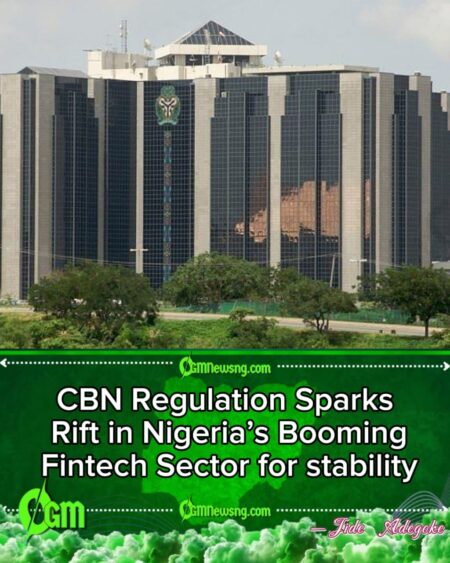
The Central Bank of Nigeria (CBN) has acknowledged growing divisions within the country’s fintech ecosystem regarding the current regulatory framework guiding digital financial services. While some operators insist that existing rules are necessary to protect consumers and financial stability, others argue that the policies are stifling innovation and limiting the sector’s global competitiveness. The debate has intensified as fintech continues to drive financial inclusion and reshape payment systems across Nigeria.
Regulatory Concerns Split Industry Stakeholders
A cross-section of fintech operators has expressed mixed reactions to recent regulatory directives issued by the CBN. According to industry sources, smaller start-ups believe the compliance requirements are too demanding and expensive, making it difficult for new entrants to survive. They argue that frequent policy changes create uncertainty and discourage long-term investment in home-grown technology solutions.
On the other hand, established fintech firms and commercial banks maintain that regulation is essential to curb fraud, money laundering, and cybercrime. These stakeholders insist that a strong supervisory framework will ultimately build consumer confidence and attract foreign investors into Nigeria’s digital economy. The CBN has repeatedly stated that its primary objective is to ensure stability while allowing innovation to thrive.
CBN Defends Policies, Promises Engagement
Responding to the criticisms, officials of the apex bank said the regulator remains open to dialogue with industry players. The CBN noted that fintech growth must align with national financial system integrity and consumer protection standards. It added that several stakeholder meetings have already been held to harmonise interests and review grey areas in licensing, capital requirements, and data governance.
The CBN bank also highlighted recent initiatives such as the Regulatory Sandbox and open banking guidelines as evidence of its commitment to innovation. According to the CBN, these programmes are designed to allow fintech firms test new products in a controlled environment before full market deployment. Analysts believe that effective collaboration between regulators and operators will determine the future pace of digital transformation in Nigeria.
Impact on Investment and Financial Inclusion
Experts warn that prolonged disagreement could affect Nigeria’s ambition to become Africa’s leading fintech hub. Venture capital inflow into the sector has slowed in recent months, with investors closely watching regulatory signals before committing funds into the CBN. Some entrepreneurs fear that overly strict rules could push innovators to relocate to more friendly jurisdictions such as Kenya, Rwanda, or the United Arab Emirates.
Nevertheless, consumer adoption of digital payments, mobile banking, and agency networks continues to rise. Financial inclusion advocates argue that fintech remains the most powerful tool for bringing millions of unbanked Nigerians into the formal economy. They urge both the CBN and operators to prioritise cooperation over confrontation in order to sustain the sector’s momentum.
Table of Contents
Discover more from OGM News NG
Subscribe to get the latest posts sent to your email.