







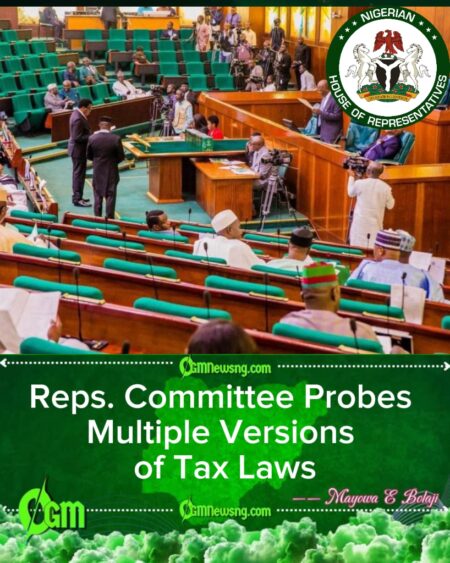
In its preliminary findings, the Reps. Committee revealed that three different versions of the Nigeria Tax Administration Act, 2025, were in circulation at the same time. The committee stated that this discovery validated allegations that the law was altered after it had already been passed by the National Assembly.
The Reps. Committee described directives to “align” the Acts with the Federal Government Printing Press as a major procedural anomaly. It argued that such actions amounted to an illegal encroachment on the constitutional mandate of the National Assembly as the sole authority empowered to make laws for the country.
By highlighting the existence of multiple versions of a single Act, the Reps. Committee warned that the situation could create confusion for taxpayers, regulators, and the judiciary, while undermining the credibility of Nigeria’s legislative process.
Reps. Committee Identifies Key Alterations and Executive Overreach
Among the specific discrepancies identified, the Reps. Committee noted that Section 29(1) of the Nigeria Tax Administration Act was altered to reduce the individual tax reporting threshold from ₦50 million to ₦25 million in the gazetted version. The committee described this change as “a clear case of the executive undermining legislative powers.”
The Reps. Committee also faulted the insertion of Sections 41(8) and 41(9), which introduced a mandatory 20 per cent deposit for tax appeals. According to the report, these provisions were absent from the authentic version passed by lawmakers, raising concerns about access to justice and taxpayer rights.
In addition, the committee accused the gazetted Act of unlawfully expanding enforcement powers to allow arrests and asset sales without court orders. It further condemned the removal of petroleum tax and Value Added Tax from federal tax listings, as well as the introduction of dollar-based tax computation for petroleum operations—changes the Reps. Committee said were never approved by the National Assembly.
Reps. Committee Warns of Threats to Rule of Law and Legislative Authority
Beyond the Nigeria Tax Administration Act, the Reps. Committee also raised alarm over alterations to the Nigerian Revenue Service Act. It noted that provisions granting parliamentary oversight were removed in the gazetted version, describing the move as a “total disregard and disrespect” for the National Assembly and the doctrine of checks and balances.
The Rep. Committee warned that post-assent alterations to legislation, if left unchecked, could weaken democratic institutions and erode public confidence in governance. Lawmakers stressed that allowing any arm of government to modify laws outside parliamentary approval sets a dangerous constitutional precedent.
As the investigation continues, the Rep. Committee is expected to submit further recommendations aimed at restoring legislative integrity and preventing future occurrences. The development has reinforced calls for stronger safeguards in Nigeria’s lawmaking process, especially as tax reforms remain central to economic stability, revenue generation, and national development.
Table of Contents
Discover more from OGM News NG
Subscribe to get the latest posts sent to your email.