








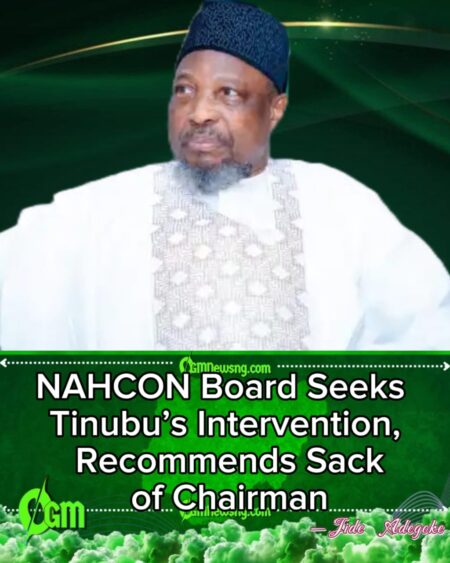
The Board of the National Hajj Commission of Nigeria (NAHCON) has written formally to President Bola Ahmed Tinubu, passing a unanimous vote of no confidence in the Chairman, Prof. Abdullahi Saleh Usman, and recommending his immediate removal from office. The board warned that unless urgent corrective action is taken, Nigeria’s 2026 Hajj operations risk imminent collapse due to what it described as leadership failures, administrative breakdowns, and loss of institutional trust under the current chairmanship.
In the strongly worded communication, board members expressed deep concern over the direction of the commission, alleging that Prof. Usman’s leadership style has created internal disunity, stalled critical preparations, and undermined confidence among key domestic and international stakeholders involved in Hajj planning. The board’s action marks the most serious internal crisis to confront NAHCON in recent years.
Board’s Vote of No Confidence and Petition to the Presidency
According to sources familiar with the letter, the NAHCON board reached its decision after a series of internal deliberations that reviewed the commission’s operational readiness, financial management processes, and staff morale. The board reportedly concluded that Prof. Usman’s continued stay in office posed a grave risk to the smooth coordination of Hajj affairs, especially as preparations for the 2026 pilgrimage cycle are expected to commence in earnest within months.
The petition to President Tinubu is said to outline multiple concerns, including alleged unilateral decision-making, disregard for collective board resolutions, and persistent conflicts with senior management staff. Board members also accused the chairman of failing to provide clear strategic direction for upcoming Hajj operations, thereby jeopardizing timelines for logistics, accommodation arrangements, and bilateral engagements with Saudi authorities.
While the exact contents of the letter have not been made public, insiders described it as “comprehensive and damning,” urging the President to act swiftly in order to prevent further institutional damage. The board emphasized that its recommendation was unanimous, signaling a rare consensus across NAHCON’s leadership structure.
Alleged Leadership Failures and Operational Concerns
At the heart of the board’s grievances are claims that the commission’s internal governance has deteriorated significantly under Prof. Usman’s tenure. Senior officials reportedly complained of breakdowns in communication channels, inconsistent policy directives, and delays in approving key operational frameworks necessary for effective Hajj planning.
There are also concerns about strained relationships between NAHCON and state pilgrim welfare boards, which play a critical role in coordinating intending pilgrims across the country. Some state officials are said to have raised alarms over a lack of clarity on quotas, service provider contracts, and early engagement with Saudi service partners, all of which are essential for a successful Hajj exercise.
In its assessment, the board reportedly warned that if current trends continue unchecked, Nigeria could face severe logistical setbacks during the 2026 Hajj, potentially exposing pilgrims to hardship and reputational embarrassment for the country. This, the board argued, made immediate leadership intervention not just desirable but necessary.
Presidency’s Next Steps and Implications for 2026 Hajj
As of the time of filing this report, there has been no official response from the Presidency regarding the NAHCON board’s recommendation. However, political observers note that the Tinubu administration is likely to treat the matter with urgency, given the sensitive nature of Hajj operations and their importance to millions of Nigerian Muslims.
If the President acts on the board’s advice, it could result in a swift leadership transition at NAHCON, with potential interim arrangements put in place to stabilize the commission ahead of the next Hajj cycle. Conversely, failure to act promptly may deepen internal tensions and complicate already fragile preparations for 2026.
Stakeholders within the Hajj industry, including travel operators and religious organizations, are expected to closely monitor developments in the coming days. For many, the priority remains restoring confidence, ensuring operational continuity, and safeguarding the welfare of Nigerian pilgrims in future Hajj exercises.
Table of Contents
Discover more from OGM News NG
Subscribe to get the latest posts sent to your email.