







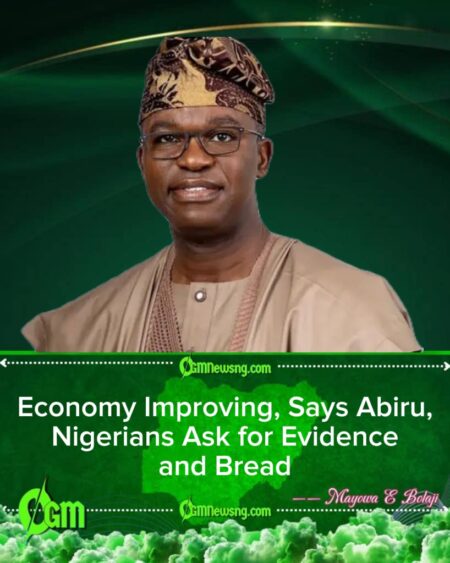
Senator Tokunbo Abiru, Chairman of the Senate Committee on Banking, Insurance and Other Financial Institutions, has declared that the economic reforms introduced by President Bola Ahmed Tinubu are beginning to yield tangible results and stabilise Nigeria’s fragile economy.
The lawmaker stated that key indicators from the financial sector show gradual recovery, improved investor confidence, and renewed hope for sustainable growth. He stressed that the administration’s bold decisions, though initially challenging, were necessary to rescue the nation from years of structural distortions.
Abiru made the remarks while addressing stakeholders at an economic policy dialogue in Lagos, where he reviewed the impact of recent fiscal and monetary measures. According to him, reforms in the foreign exchange market, fuel subsidy removal, and tax restructuring have started to correct long-standing inefficiencies. He argued that the policies were designed to reposition Nigeria as a competitive investment destination in Africa.
The senator further noted that Nigerians are beginning to witness the benefits of disciplined economic management. He explained that inflationary pressures are gradually moderating, while government revenue has improved due to transparency in public finance. Abiru expressed optimism that with consistency and citizen support, the Tinubu administration would achieve lasting macroeconomic stability.
Banking Sector Records Renewed Confidence
Highlighting developments in the banking industry, Abiru said the sector has shown remarkable resilience since the introduction of the reforms. He pointed to increased capital inflow, stronger balance sheets, and enhanced regulatory oversight by the Central Bank of Nigeria as evidence of recovery. According to him, commercial banks are now better positioned to support small businesses and real sector investments.
The senator emphasised that exchange-rate convergence has reduced uncertainty in the market and restored credibility to Nigeria’s monetary system. He added that foreign portfolio investors who previously adopted a wait-and-see attitude are gradually returning. Abiru maintained that these positive signals confirm that Tinubu’s economic direction is the right path for national prosperity.
He also commended financial regulators for maintaining stability despite global economic headwinds. The lawmaker urged banks to lower lending rates and expand credit to agriculture, manufacturing, and technology sectors. He argued that a vibrant private sector remains the engine of job creation and poverty reduction.
Short-Term Pains, Long-Term Gains
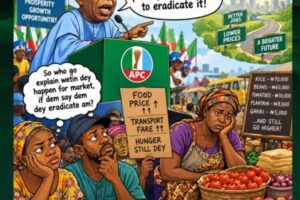
Addressing concerns over the rising cost of living, Abiru admitted that the reforms came with unavoidable short-term hardships. He, however, insisted that previous economic models built on subsidies and artificial exchange rates were unsustainable. The senator appealed to Nigerians to remain patient as the government rolls out targeted social interventions to cushion the impact.
He disclosed that the National Assembly is working closely with the executive to design pro-people legislation that will support the reform agenda. These include bills aimed at strengthening consumer protection, expanding digital taxation, and improving the ease of doing business. Abiru assured that parliamentary oversight would ensure that the benefits of the reforms reach ordinary citizens.
The senator concluded that Nigeria is gradually moving from economic uncertainty to stability under Tinubu’s leadership. He urged state governments, the private sector, and development partners to align with the federal government’s vision. Abiru expressed confidence that the coming months would reveal even stronger growth indicators and better living conditions for Nigerians.
Table of Contents
Discover more from OGM News NG
Subscribe to get the latest posts sent to your email.