









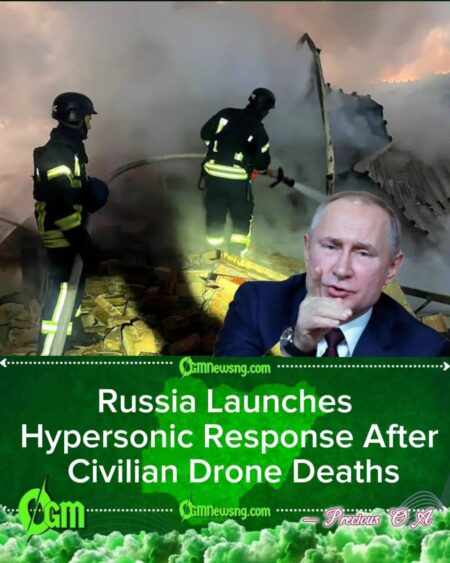
Russia has launched what officials describe as a hypersonic retaliatory strike following a series of reported civilian drone fatalities that have intensified international alarm. The development marks a sharp escalation in an already volatile conflict environment, as governments and multilateral bodies assess the implications of weapons that travel at extreme speeds and compress decision timelines.
Russia framed the action as a defensive response to mounting security threats, arguing that recent drone incidents created an unacceptable risk to civilian life and critical infrastructure. Officials said the operation was calibrated, targeted, and intended to deter further attacks.
Across diplomatic channels, initial reactions were swift, with calls for restraint and transparency. Several capitals urged all parties to clarify facts surrounding the drone fatalities and to open lines of communication to prevent miscalculation.
What Hypersonic Weapons Mean
Hypersonic weapons are designed to travel at speeds exceeding Mach 5, making them difficult to track and intercept with conventional air-defense systems. Their maneuverability in flight further complicates detection and raises concerns about shortened warning times.
Russia has invested heavily in hypersonic research over the past decade, frequently highlighting these capabilities in defense briefings and public demonstrations. Analysts say such systems are now central to strategic deterrence postures.
Military experts caution that the proliferation of hypersonic technology increases escalation risks, as leaders have less time to verify threats and make measured decisions, heightening the chance of rapid retaliation cycles.
Civilian Drone Fatalities at the Center
The latest escalation follows reports of civilian deaths attributed to drone activity in contested areas. Independent verification remains ongoing, with humanitarian organizations calling for unfettered access to investigate circumstances surrounding the fatalities.
Russia maintains that it raised concerns through diplomatic channels before taking military action, asserting that the deaths underscored a pattern of escalating aerial activity near population centers.
Human rights monitors emphasize the need for impartial inquiries and the protection of civilians under international humanitarian law, urging all parties to prioritize de-escalation while investigations proceed.
Diplomatic Fallout and Global Responses
In emergency consultations, several governments convened special sessions to discuss the ramifications of hypersonic strikes. Statements stressed the importance of transparency, restraint, and the preservation of civilian safety.
Russia reiterated that its actions were proportionate and aimed at preventing further harm, while inviting dialogue under established security frameworks.
Regional organizations expressed concern that advanced weapon deployments could destabilize neighboring states and disrupt airspace safety, prompting calls for confidence-building measures and communication hotlines.
Markets, Energy, and Airspace Implications
Beyond security, markets reacted nervously to the news, with energy prices showing volatility amid fears of supply disruptions and heightened geopolitical risk.
Russia is a major player in global energy flows, and any perception of prolonged instability can influence pricing, shipping insurance, and freight routes, according to commodity analysts.
Airspace authorities in several regions reviewed routing advisories for civilian carriers, assessing whether adjustments were necessary to ensure passenger safety amid evolving military activity.
What Comes Next
Observers are watching for potential diplomatic overtures, ceasefire proposals, or multilateral mediation efforts that could stabilize the situation.
Russia has signaled openness to talks, provided security guarantees and verification mechanisms are part of any framework addressing drone operations near civilian areas.
As international bodies prepare further briefings, policymakers face a critical period in which measured steps could either cool tensions or allow them to intensify, underscoring the urgent need for dialogue and confidence-building measures.
Table of Contents
Discover more from OGM News NG
Subscribe to get the latest posts sent to your email.