







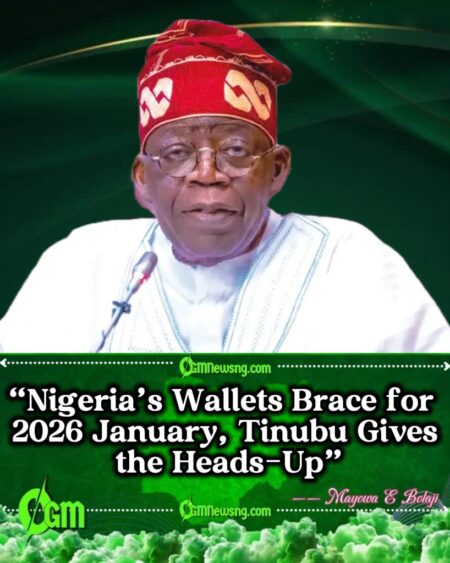
President Bola Ahmed Tinubu has confirmed that new tax laws will take effect on January 1, 2026, alongside fiscal reforms that have been implemented since June 2025. The president emphasized that these measures are part of a long-term strategy to create a fair, competitive, and stable tax system, aimed at strengthening Nigeria’s economy and improving public revenue collection.
President Bola Ahmed Tinubu Explains the Purpose of the Tax Reforms
President Bola Ahmed Tinubu stated that the new tax laws are designed to ensure equity in Nigeria’s fiscal system, reducing loopholes and encouraging compliance across all sectors. According to the president, the reforms reflect a commitment to a tax system that is both transparent and predictable, enabling businesses and citizens to plan effectively.
He further stressed that the reforms are part of a broader fiscal reset, seeking to stabilize government revenues while fostering economic growth. “This is a long-term strategy, not a short-term adjustment,” the president said, emphasizing the administration’s focus on sustainable fiscal management.
President Bola Ahmed Tinubu Highlights Continuity in Policy
President Bola Tinubu noted that the new tax measures will complement reforms already introduced in June 2025, which included modernization of tax collection methods, digitalization of records, and simplified compliance procedures for both individuals and corporations.
He reassured citizens and business operators that the government will continue to provide guidance and support, ensuring that all stakeholders understand and adapt to the new tax regulations effectively. “Our goal is to build a system that is fair and competitive,” Tinubu said.
President Bola Ahmed Tinubu on Economic Implications
According to President Bola Tinubu, the updated tax framework is expected to boost revenue generation, increase investor confidence, and enhance Nigeria’s global economic competitiveness. The administration anticipates that a fairer tax system will create opportunities for local businesses to thrive while encouraging foreign investment.
Economists note that the reforms could help reduce Nigeria’s dependence on oil revenues and diversify the country’s fiscal base. Analysts suggest that clear communication and stakeholder engagement will be critical to ensure smooth implementation in January 2026.
President Bola Tinubu Calls for Public Cooperation
President Bola Tinubu appealed to citizens, businesses, and state governments to embrace the reforms and work collaboratively with the federal government to ensure compliance. He emphasized that the success of the fiscal reset depends on mutual cooperation and a shared commitment to Nigeria’s economic development.
He concluded by reiterating the government’s dedication to fairness and stability, asserting that the reforms will lay the foundation for a resilient and equitable tax system for years to come.
Table of Contents
Discover more from OGM News NG
Subscribe to get the latest posts sent to your email.