







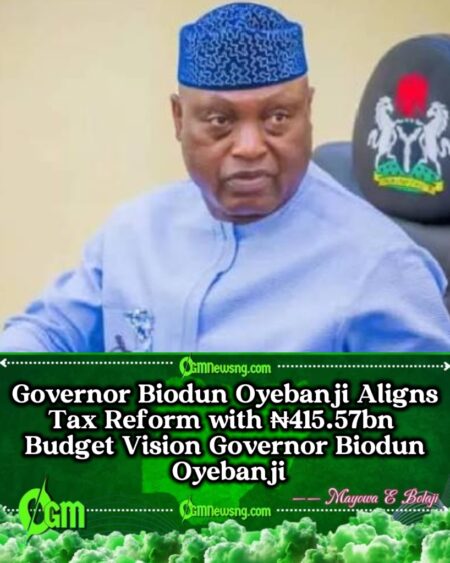
Governor Biodun Oyebanji has led Ekiti State into Nigeria’s fiscal history books as the state becomes the first in the federation to domesticate the Nigeria Tax Administration Act, marking a major milestone in revenue reform and public finance governance. The historic move followed the signing into law of the Ekiti State Revenue Administration Law, 2025, a development widely regarded as positioning Ekiti as a national pacesetter in tax administration efficiency, transparency, and compliance.
Governor Biodun Oyebanji’s action aligns Ekiti State’s revenue framework with the federal Nigeria Tax Administration Act, introducing a standardized legal structure for tax assessment, collection, and administration. Fiscal policy analysts say the domestication of the Act is expected to significantly strengthen the state’s internally generated revenue (IGR), curb revenue leakages, and promote voluntary tax compliance among individuals and businesses operating within the state.
Governor Biodun Oyebanji signed the landmark revenue law alongside the Ekiti State 2026 Appropriation Bill of ₦415.57 billion during a brief but symbolic ceremony held at the Executive Council Chamber in Ado-Ekiti. The simultaneous assent to both the fiscal legislation and the budget underscored the administration’s commitment to fiscal discipline, accountable governance, and the pursuit of sustainable economic development for Ekiti State.
Governor Biodun Oyebanji Drives Landmark Tax Reform in Ekiti
Governor Biodun Oyebanji described the domestication of the Nigeria Tax Administration Act as a deliberate and strategic decision aimed at modernizing Ekiti’s revenue system. He said the new revenue administration law would create a more predictable, transparent, and business-friendly tax environment that encourages investment and economic growth.
Governor Biodun Oyebanji emphasized that the law is not designed to overburden citizens but to ensure fairness, equity, and efficiency in tax administration. According to him, a harmonized tax framework will eliminate multiple taxation, clarify taxpayer obligations, and enhance trust between the government and the people.
Governor Biodun Oyebanji further noted that Ekiti’s proactive adoption of the law reflects his administration’s broader reform agenda, which prioritizes good governance, digital transformation, and prudent financial management. He urged stakeholders, including businesses and professionals, to support the implementation process for the benefit of the state’s economy.
Governor Biodun Oyebanji Signs Revenue Law Alongside ₦415.57bn 2026 Budget
Governor Biodun Oyebanji assented to the Ekiti State Revenue Administration Law, 2025, simultaneously with the 2026 budget, signaling a strong link between revenue reforms and development planning. The ₦415.57 billion budget is expected to be driven largely by improved revenue mobilization under the new legal framework.
Governor Biodun Oyebanji explained that efficient tax administration is critical to funding infrastructure, education, healthcare, and social services without excessive borrowing. He said the new law would empower revenue authorities to operate more professionally while safeguarding taxpayer rights.
Governor Oyebanji added that aligning revenue reforms with the annual budget cycle will enhance fiscal sustainability and ensure that public funds are deployed more effectively. Observers say this integrated approach could serve as a model for other states seeking to strengthen their financial base.
Governor Biodun Oyebanji Positions Ekiti as National Model for Fiscal Governance
Governor Biodun Oyebanji’s decision to domesticate the Nigeria Tax Administration Act ahead of other states has drawn attention from policy experts and fiscal authorities nationwide. Many view Ekiti’s action as a bold step that could accelerate nationwide adoption of standardized tax practices.
Governor Biodun Oyebanji reiterated that the state is open to collaboration and knowledge-sharing with other subnational governments interested in similar reforms. He said Ekiti’s experience shows that political will and stakeholder engagement are key to successful tax administration reforms.
Governor Oyebanji concluded that the ultimate goal of the new revenue law is to build a stronger, more resilient Ekiti economy where public resources are efficiently managed for the collective good. With this landmark move, Ekiti has firmly positioned itself as a leader in Nigeria’s evolving fiscal and tax governance landscape.
Table of Contents
Discover more from OGM News NG
Subscribe to get the latest posts sent to your email.